Sunday, 21 April 2019

Easter Blog: My Abstinence


O
n Ash Wednesday I found I needed something to give up. At the time, I had sinusitis and I was reading an online blog explaining how caffeine exacerbates the congestion. I also had a Twitter tab open, full of bilious ravings and to which I was oddly addicted. The answer seemed providentially to present itself: give up coffee and Twitter.

I had thought that, of the two, Twitter would be the hardest to defeat, spending as I did so many fruitless hours flicking through it on my phone. Coffee was a delicious drink, merely. How hard could it be?

C
affeine withdrawal lasted a full two weeks. I had a chronic headache which, at times, was as bad as a migraine. I was anxious, internalising everything, ratty, explosive and, I guess, bloody awful company. Some people told me I was mad; others, that I should wean myself off more slowly. But I decided that I had stumbled upon a dependency. This made it a matter of urgency that I should overcome it: I held on and grimaced through the pain. People ask me how I did it. The answer is always the same: sheer force of will.

But with Easter comes release from my abstinence. Do I really propose to wean myself back onto this drug? I sleep better, my moods are better regulated, my skin is better, my energy reserves last longer…admittedly, my appetite is increased, making weight management tougher, but this is a small price to pay. The answer is that I must learn to love decaff at weekends only, which I used to consider with scorn and slight regard.

S
corn and slight regard on Twitter made it easy to stay away, more so than expected. I have now deleted the app from my phone, removing both the means and the temptation. I am clear that if I were not already on Twitter, I would not now join it, and I say that with a sense of sorrow, for when I joined, it was both useful and fun. At moments of high news, occasionally I would break my abstinence, but only in order to check specific people, such as the Brexit wonk Henry Newman or journalist James Forsyth, who can be relied upon to give the commentary I need to keep in the loop. Otherwise, I felt fair liberated from the corrosiveness of all that I habitually read on there.

That changed with Notre Dame. The BBC news live feed was updating infrequently, even as the fire raged, and in my gut I felt a tension to know if the building could be saved: I spent the evening on Twitter. I ought to have saved myself the bother. News – as in, news – came no faster than on the BBC. But misbehaviour was endemic. I shall not detail the things I read: suffice it to say it reminded me of why I put it down. It was mostly narcissism and baiting and I felt as though I were locked in a dungeon in Hell surrounded by all the Furies.

But as I have a minor following, it would be silly to throw it away. This blog is a case in point, promoted on my Twitter page. Just as I learned to manage my caffeine problem, so shall I manage my Twitter problem: I shall mute or unfollow all contentious, trolllish accounts so that my feed is healthy to read. And I do mean healthy, for I am firmly of the view that much of what seeps through is poison to the mind.

Sunday, 27 January 2019

On Writing 'A January Tale'

On Writing A January Tale

I have nearly finished the typed draft of a new story, despite having been struck down and delayed with flu. I won't be able to show it to you for some time as I shall first seek some organ or other in which to publish it. If no one wants it, it will go on my website.

Outline

It tells the story of two friends who have long been estranged but who are seeking to rebuild their relationship, not really knowing how. The only thing they know is alcohol and the old habits through which they first became close, including a drinking game in which as students they used to compete to show their superior knowledge of literature. The game has many expressions, but in this case it involves naming the most iconic moments in literature. Before long, they begin naming moments that the other friend thinks is a loaded suggestion, and this soon becomes deliberate in a sequence of strike and counter-strike. So they launch their coded broadsides at each other through these proxy references, not knowing if they are killing something long sick, or else purging the body of its poison.

Origins

I have written before about friendship, especially male, and the idea has weighed on my mind since. After receiving recommendations from colleagues, including At Swim, Two Boys and The Body, I went for a long, late evening walk, as is my wont, wracking my mind. Eventually, as I was coming back to my flat, seemingly empty-headed, the idea of two chaps standing outside under the porch together coalesced with all the old stories I had been raking over as well as with the ideas about loneliness and distance that I had thought about for the recent blog post.

Development

The story clearly had legs. Firstly, it seemed to touch upon miscommunication, particularly of the male type, with which I am intimately familiar. There's that reluctance between men to open up and discuss anything, especially if it needs discussing, without the assistance of alcohol. It also touched upon that root of so much manipulation as well as miscommunication: the ability to pour your own meaning into something wide open to interpretation.  

But it also offered a glimpse into what often brings men together in the first place, that of the shared endeavour or activity. Such a preposterous little game would seem odd to a casual observer, but like any game, it has rivalry, frisson and, above all, something in common. Being particular to a small group, or a pair, would only recommend it to them even more as something unique, their own little world.

It is part of the question of the story: will it be enough? It might have been when they were under-ripe undergraduates, but much has passed since then. It is part of my own experience to find the things that as a student I thought were the most important things in the world don't really matter any more, and the games we played have been locked away with all our other toys. There's also a part of me, a very big part (some might suggest the greater part) that is still more boy than man, even if I do have a mortgage now. Reviving an old game like this might be desperate, and it might be too late; it might also work.

This game, and all else that such men might have in common, opens up an opportunity to explore something else I have long been thinking about, which is a kind of negative capability, the author putting things out of view, making something that is visible to the reader or audience still mysterious and private between the characters. (I shall write more extensively on this idea later.) When both characters speak through proxy references, they hint at things which we can, at best, only partially understand, either because we have insight already, or else because we know the content of the literary references. Yet we can't know, unless I reveal to us, quite what these references mean to each man, or why one would be conciliatory and another be provoking. 

Next steps

The foul hand manuscript all done, the typescripts half done, and the leg-work in finding a place to send it not yet done, and the waiting that follows not nearly begun, it will be a while before anyone sees it. Most organs take three months, sometimes as much as six, to ignore you and not reply, so you have to keep close watch on all your submissions. None has yet accepted one of my submissions so I hold no great hope. But that can always change.

Sunday, 13 January 2019

Can Writing Heal the Brexit Wounds?

Can Writing Heal the Brexit Wounds?


Channel 4: Uncivil War

I have not seen the recent Channel 4 drama, Uncivil War. I doubt I will. I expect it will be too painful. But I have heard much in its praise, especially from partisan sources on social media which suggest it does not take sides and that it paints no one in a particularly flattering light. One comment I saw - from a leave supporter - suggested that anyone who was able to watch it without reflecting upon their own position was beyond reason. 

This got me thinking about how art might start to respond to events. It has to respond at some point, but because we are still undergoing the process, it is less able to do so, unable as I think we are to take a clear perspective on things. But perhaps the time is arriving, and this drama in particular is the first sign of art trying to help us process the pain?

Healing

Some kind of healing will be necessary. The archbishop of Canterbury has called for some government leadership in order to facilitate this, though I wonder if, rather than imploring the government, it were better the church seize the initiative and do it instead. Either way, he is right that this mood cannot be allowed to fester. He has a model to follow in this in the Church of Scotland, which held a service of unity following the 2014 referendum, though I know of none of its work in this area since that time. 

But what of the rest of us? Just as I argue Welby cannot simply wait for the government to take the lead but should seize the initiative himself, so too I argue the rest of us have a duty to do the same, whatever our place in society. If I am right about Uncivil War, then television and drama might already have made a start here. 

Harming

There is, of course, a danger. Words can heal, and words can harm. A cursory glance over social media should reveal just how ghastly some people are determined to be right now. Even in more formal work, there will be a number of people who relish opening fire at those who vote differently to them, or share a different vision. Such behaviour is the outcome of a petty mind, impossible to reason with; the product of character that desires not to reconcile but only to denounce. Most recently, the BBC version of Poirot at new year falsified history in order to associate the leave vote with fascism, so it has already started. I therefore state, with total confidence, that poisonous, tendentious and polemical work will naturally constitute the weakest work, most worthy to be disposed.

The form it should take

As suggested above, the perspective that time lends to us will enable us better to make sense of what we have been through, and I don't believe we are securely in that place, even if one good drama has made a start. Sometimes, these events will need to be tackled head on. At other times, it might help to explore these things through allegory.

It is easy to conjecture how. Take some of the factors of these times:
  • long term friends falling out
  • irreconcilable interests between different parties, factions or groups
  • paranoia, denunciation, suspicion
  • political rhetoric and its power for good and ill
  • identity
  • borders
and anything else you care to mention. All of these things can be discussed in drama, literature, art, music, whatever, without having to revive the myriad ghosts that lurk behind the spectre of Brexit, and this might help to reduce the inflammation. 

My own contribution

I have a first draft of a novel which does some of what I argue for, totally by accident. The story requires a hard political border and tension between two states. I invented a parallel world in which one of those states is the former capital city of the other, but which seceded several generations before. I conceived of the idea before the 2015 general election, when Brexit had not come into view, whilst out walking on Southborough common, soaking up the beauty of the place in the sunshine and contemplating the difference between my life in Kent and my old life in London. But if anyone were to read it now, not knowing these things, they would naturally see Brexit in it. I am comfortable with that. My world being a false creation, I can present secession without presenting a view on it, or alienating those who do come to it with their own views. 

Now I just need to redraft and get the blasted thing published.

Conclusion

It helps that I conceived of this story before Brexit, for I might not have been able to handle it so dispassionately in this atmosphere. But that only makes it more urgent that we try: feeding feuds and despising your neighbour, chewing the gristle of old grudge - this is easy, even satisfying; to reconcile requires good will and determination, which is in short supply at present. That is why Welby, and all of us who desire to reconcile, should find ways, including ans especially in writing, to seize the initiative, for otherwise we will be in the power of those who relish discord.

Sunday, 6 January 2019

Male Friendship in Literature (especially that which is new)

Male Friendship in Literature (especially that which is new)

The problem emerges

Image result for brideshead
Too painful at my age
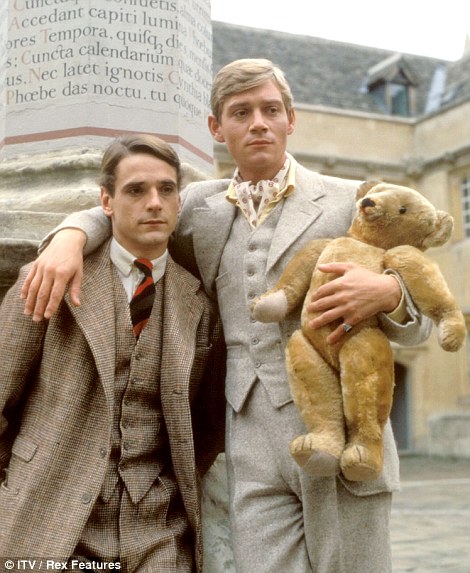
Upon a Friday evening spent alone, at home, I searched my DVDs for a story to keep me company and comfort me, specifically on the theme of friendship. I quickly became frustrated. Lord Of The Rings? Too long, too familiar and quite old. Brideshead? Much too painful for a man my age. Sherlock? Gets hysterical. Yet what else was there? Precious little. 

So I turned to literature. 

Lord Of The Rings? Brideshead? I could see a problem emerging: everything was either familiar or old. Or both.

I consulted the internet. There were a few more suggestions. Mice and Men? Please, I'm an English teacher. Lord Of The Rings was another. Brideshead Revisited another...

So I consulted my friend, Bryan. He suggested Lord Of The Rings, Mice and Men...but he added to the tally some suggestions from classic Russian literature, quite a lot of friendship in Shakespeare, including Hamlet and Horatio, and in 19th century prose, such as Bingly and Darcy and some others in Dickens. Then we discussed the problem over the phone, and agreed that, as far as we could tell, there was not much noteworthy writing on this theme from the last fifty years, and nothing we could name. 

Then he made a couple of suggestions that really got me thinking. Maurice? Dorian Grey? No, I said. That would not do: they are romantic. But so what? What is the essential difference? I said at the time, and I think I was more right than I realised, that there was something delicate, mysterious, sweet and tantalising about friendship, especially between men, whereas depictions of romance are more obvious, predictable, digestible and, frankly, formulaic. 

Digging further

Internet searches revealed a number of interesting things:
  1. Lists of 'top ten' etc. fictional male friendships are repetitive, and much of it is old
  2. Male friendship currently is better served in film and television than in literature
  3. From some quarters there appears to be even some hostility towards it featuring in new literature
  4. Given how lonely men are becoming, with around 2.5 million men having no friends, and how difficult men find it to make and keep friends, there is surely a need to discuss male friendship in current writing
  5. Male friendship makes people uncomfortable.
I want to dwell on points 2 and 5 together first. 

Putting aside direct page-to-screen adaptations, I could name a few titles, not all of which I have seen, or seen in full, which take up this theme. The problem I have with them is that they intensify what I would call the histrionics, to the point where I no longer recognise the friendship for what it is. Take Sherlock, for instance. It starts really well: two lonely misfits who find one another, and, especially Watson, find new life through one another. However, by the third series, and through into the fourth, their relationship starts revelling in the caricatures and fantasies of the fan base (more on that later) and morphs deliberately into a surrogate romance. Similarly with House MD, which is obviously based on the Sherlock Holmes stories. When House has his difficulties or when Wilson starts to die, the dynamic becomes weepy and saccharine. 

This speaks of two problems:
  • Friendship is undervalued as a theme; less important than romance or family. Two close friends who remain close friends won't do, as friendship simply is not enough: they must become something more
  • Friendship is not understood. It is precisely because friendship is naturally undramatic, normally, that it is so important and valued: conversation, quality time, nights out, confidants' advice, etc. This is quite apart from the war of nerves, anxiety and high-stakes conflict and resolution that goes with romantic interest but which, by contrast, make romantic relationships less stable, reliable and all too often less enduring. 
Sometimes the friendship is put under test, such as one friend falling ill, which is a naturally more revealing test of the depth of affection, but even then, the friendship, though demonstrative, remains for the most part undramatic. The best recent depiction of this that I have seen is the film 50/50, in which Seth Rogen's character is a doughty rock throughout his friend's ordeal.
Image result for johnlock
This is mild.

The other, connected problem is that this topic seems to make people uncomfortable, as hinted at in the link on point 3 but more evident in the fan responses to things such as Sherlock and Lord Of The Rings. It is a common suggestion, made in countless pictures and fan fictions either hopefully or sneeringly, that the men must secretly have romantic feelings for each other: 'Johnlock' is a thing, as evinced by fan art, the featured image being the mildest I feel I can show. And the conversations around Samwise Gamgee and Frodo Baggins seem deliberately to overlook the origin of that friendship in the model of the British officer and his batman in the trenches. Certainly, such treatments do touch on the real ambiguity of some male relationships, in which the line between the platonic and the romantic is not always clear to the friends themselves. But they also speak of a need either to laugh the friendship off or to transform it into something more easily understood and categorised; an inability, as Keats might have put it, to enjoy the mystery without the irritating reflex of reaching after certainty.

Writing now

Image result for two boys at swim
Well reviewed and
worth investigating
I have mentioned 50/50 as a good modern treatment of male friendship that I know about, and the first two series of Sherlock as well. In terms of writing, I know of nothing very recent that has captured the public mood. I have heard of one title, At Swim, Two Boys, which seems promising but the synopses also indicate that the relationship becomes romantic. About a year ago I read The Gustav Sonata, which seemed promising at the start but quickly descended into the level of a first draft. It therefore seems to me that this is a topic and theme that is absolutely ripe for further exploration, both in pursuit of reading and of writing. 

Monday, 31 December 2018

2018: Year in review

2018: Year in review

Fraser Nelson argues, as the year draws to a close, that 2018 has been a good one for Britain, in terms of daily life, despite how terrible the headlines have often been. Allow me to be solipsistic for a moment and to say that, as far as my life is concerned, 2018 has been something of a vintage year.

This time last year

I lived in a small, rented studio flat. Too small for my expanding life and maturing sense of myself, and too insecure really for me to think of it as home. But it was home, and the only home I had, in spite of saving regularly towards a deposit, which meant going without the other things in life I would have wished for. It was perfect for me when I moved in, but after nearly four years, I felt most frustrated to be there. Added to this was a desire to move forward in my career, which created an overall sense of restlessness, sometimes getting the better of me. 

Furthermore, I was feeling less than confident in myself personally, for I had just bought a new suit - Charles Tyrwhitt - and it was huge, shockingly big, and it brought home to me how large I was getting. I suppose I thought, 'this is it, I'm fat now' and left it at that, but it also left me conscious of my weight in a way I had not been since I was at the other end of the scale: too thin. I tried halfheartedly to do extra exercise but the motivation was not there. I hoped no one would notice; as it was, most people were just too polite to comment. 

Heading into 2019

I now live in my first home. It's weird. I can hang pictures up. I can put curtains up. If I want to, I can paint the walls. I am still not accustomed to these thoughts, but now that I am at liberty to think this way, I have run away with the idea of turning the corridor - my corridor - into an art gallery. How luxurious! And the feeling of security has been liberating in other ways, in terms of hobbies. I have begun brewing my own beer: first batch was toxic, lethally strong, which pleased me immensely. I have also taken to doing work on my guitars, and teaching myself how to maintain them. To cap it all, I have lost a lot of weight, and I feel so much more confident in myself for having done so. The only drawback is that new clothes cost a ton, and I am so out of the habit of shopping to look good that I have no idea what I should buy. Added to progression in my career which has taken place since then, and I can look back upon 2018 as one of real forward movement in my life.

Achievements

I have finished a first draft for a novel, written many poems and short stories and started a new album of music, which is shaping up nicely. My greatest achievement has been the long treks that I undertook solo, and which I recorded in film and picture. The journey to Hastings was the hardest, as I was a total novice and really quite naive, but I learned from it. The journey to Canterbury was far more successful, but also very moving, in a way I still find mysterious. I think about the days I spent on the track, the hardship I went through and the euphoria it engendered in me, and my mind now points to the Spring and Summer with a kind of hunger to be back out there, seeking some elusive thing I last found in Canterbury, and which remains there, somehow. 

Objectives for 2019

You might call these 'resolutions', and some of them are, but a resolution implies a change to one's lifestyle, outlook or approach, which not all of these things are:
  1. Get the novel drafted to a standard that I can send it to an agent
  2. Get a story or poem published somewhere
  3. Get fit, not so much to lose weight as to tone up and be healthy
  4. Finish the album of music and vanity publish it
  5. Play live more often
  6. Watch more local rugby
And much more, I am sure. But this is a good enough list to begin with.

I wish everyone a happy, productive, secure and successful 2019. 

Thursday, 30 August 2018

After Canterbury

Journal Wednesday 29th August 2018 0840hrs

Yesterday I transcribed my journal entries from pilgrimage. Rather light work, I must say. It’s possible all I had to say, and all that was of value, went into my video diary, which I must yet edit. It is also possible I was simply too tired or practically inconvenienced to write. What is slightly more mysterious to me is that I wrote not a word thereafter. I know I was highly charged, full of feelings, raging and flowing. Some of it I know is captured on video, but
none of it in written word. Why?

At such distance, I cannot say with great certainty; equally, distance can lend clarity.
Feelings do not come at us in the shape of words. Words are simply the tools we have with which to give them shape. I remember enjoying whatever it was I was feeling, just allowing myself to feel without having to give it a name, explain it or make a record. I am reminded of people at special events who film everything on their phones yet forget to watch any of it for real.

I know I had a strong desire to close the door, to draw a curtain on the experience. After I tossed my staff into the river, that was it, and for the next two days – a night in Canterbury, a day in Deal and on the road – I felt as though suspended, temporarily removed from any reality but my own. There was no home to go to, no time to spend, use or waste: just me and an evening and a morning.

I bought a cigar before Evensong; once I had showered and dressed for the evening, I ate dinner at a Mediterranean restaurant by myself. Some visitors from Lancashire got chatting with me. That was nice. My inhibitions with strangers went once I was on the road, and I had, by that evening, developed a certain joy in connecting with people. There was also a degree of counsel in it, for I had to put my journey into words, and unlike with standard conversation – work, love life, &c. – the chat was fresh and I wanted to share it as though for the first time, because it was the first time.

Thereafter, a drink at the Cricketers and then a puff overlooking the Stour under the aegis of the West Gate. A stranger came to me and, photographing the church there, asked me what it was called. I said I did not know, adding ‘it’s pretty, isn’t it?’ and she readily agreed. Everything was lovely to me that evening.

It was Evensong that did it, I think. Had it been a trek just anywhere – to Milton Keynes, let’s say – the experience would have been duller. It was the voice, the silent accord, the reverence for words, the harmony, the stillness, the purpose, the spiritual warmth, everything. Sitting there, bathed in song, I could let go. And there was much to let go.

Much to let go. For I had not realised, was not conscious of, how much it was my mind
that drove me forward. Not my body. Without anyone else at my side, all the drive came from within, and that leant me the most tremendous energy and power, enough to push me across an entire county by myself. I complain in my notes that I am not as reflective as I think I should be. Well, this made sense of it. It was all subconscious, below the level of my waking thoughts. And so sitting there, at Evensong, I felt inside that it was ended, and I let go. The energy and the power fell away, and everything that had hibernated beneath came to life in me, and made me feel freer than I ever had.

Maybe that’s what happened. It feels right to me. I still have a little of it now, or a token of it, as I recall it now for this journal: for I feel so young again; life is exciting again.

Friday, 1 June 2018

Journey Through Kent and Sussex: A Journal

Journey Through Kent and Sussex: A Journal

The following passages are taken from my journal, those segments concerning my attempt to walk to Hastings from Royal Tunbridge Wells between the dates of Monday 28th of May and Wednesday 30th of May, 2018.


Sunday, 27th of May

On the Bluebell Line
Tomorrow, I begin a great trial and test. I shall walk to Hastings. All that there is to sustain me and keep me shall be on my back; and it is a heavy load indeed. But I am looking forward to it and eager to start.

This is the culmination of the self-training I have undertaken in preparation for my pilgrimage in the Summer holidays. That should take around two weeks, perhaps more, and I shall have much to do even after this trip. But so far, I have only done single-day trips and this is the first time I shall be out in the wild and walking day after day. 


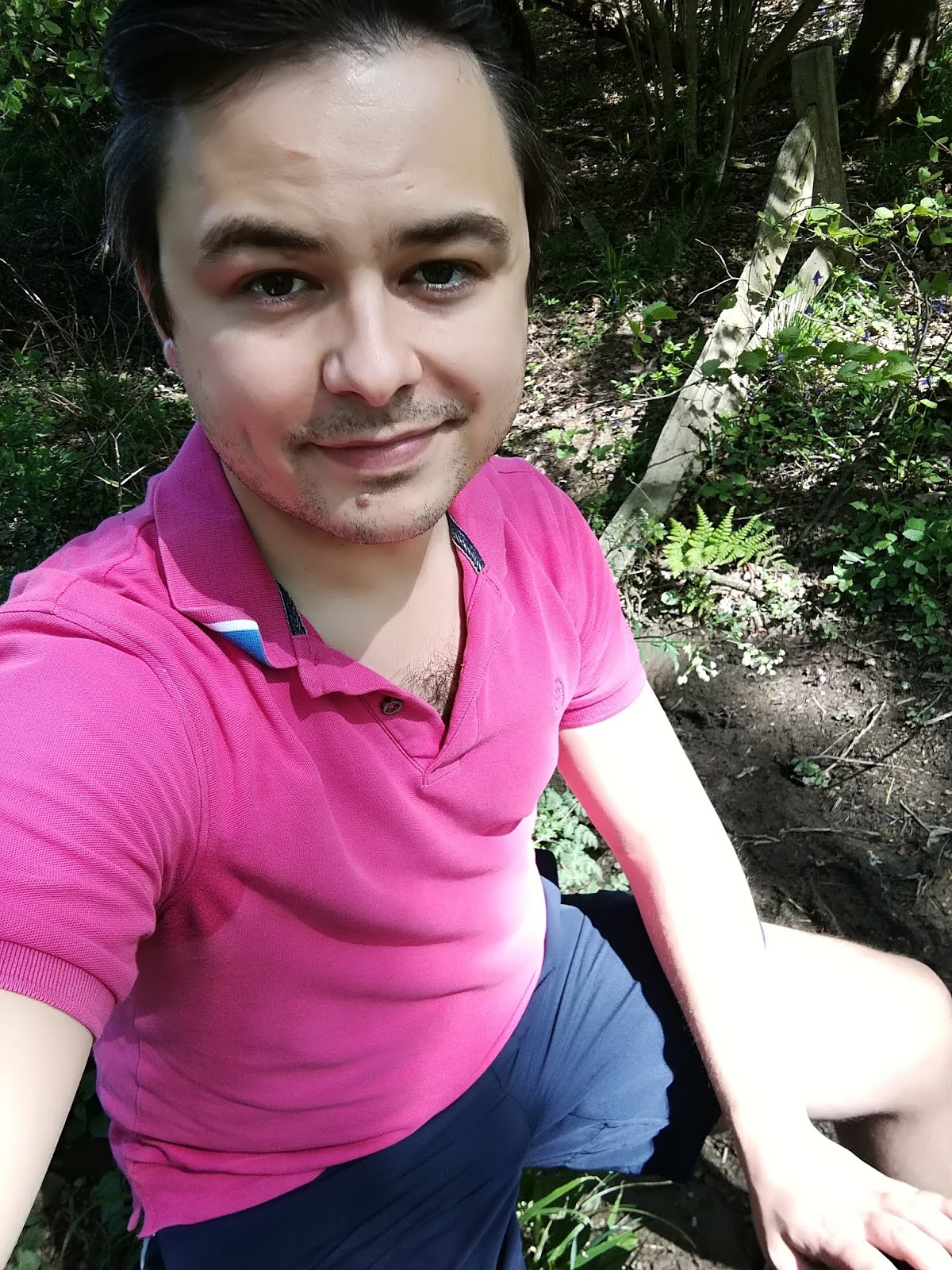
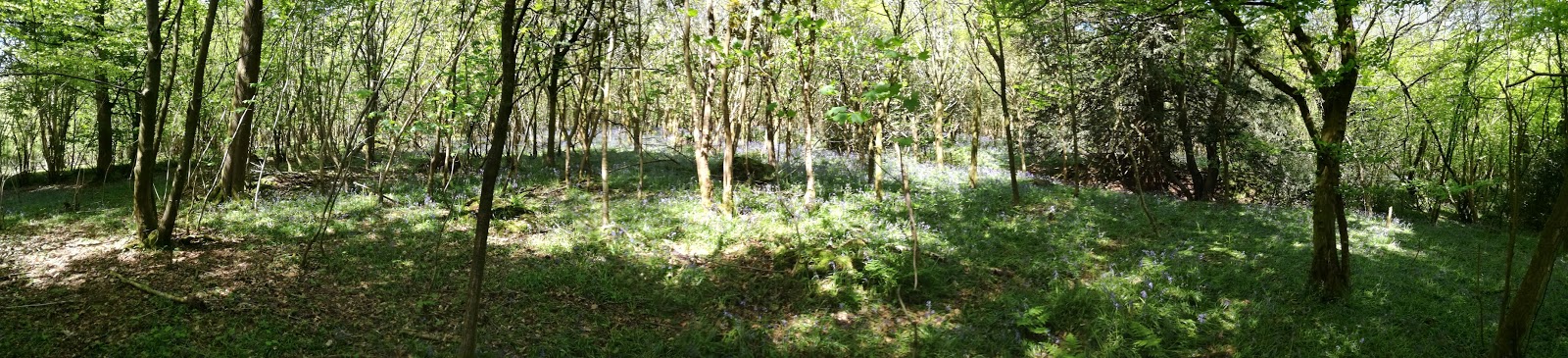
My first preparatory trek was to the Bluebell Railway, timed to catch the bluebells in bloom. That really was glorious, so beautiful, and a great success as well as instructive. I was well prepared nutritionally but very poorly prepared for navigation, having to rely on my phone for its GPS. I was not able to make it all the way to Sheffield Park as the train timetable was against me, and had I pressed on from Horsted Keynes I would have found myself stranded. I took many audio clips of my thoughts along the way and many pictures, all of which I am yet, to my shame, to knock together and transcribe into a blog piece.

For the second trip I set upon the task of improving my navigation. I prepared OS maps and banned myself outright from using my phone. Alice Hardy came with me, keen for the opportunity to trek somewhere, as far as Penshurst. It is just as well, for she could read the map better than I could. The first leg, to Penshurst, was much the loveliest, with rolling hills and valleys to please the eye and work the legs, and the sense of being alone and in possession of it all was thrilling. Alas, the leg to Tonbridge was less interesting visually and the paths were much busier, especially with cyclists, which I resented. An additional difficulty, when passing so many bodies of water, was the abundance of mosquitoes, and I regret to say they had a good drink at my expense. Nonetheless, I succeeded in my aim of navigating by map the whole way. 

So now I come to much the greatest challenge. The sheer weight of the bag; the unfamiliar nature of the route; the unforeseen circumstances for which I am doubtless unprepared, in spite of my best efforts; the succession of days walking; the length of solitude I shall endure; all these things, and more, shall put me sorely to the test. Yet, why not? For is this not the very point of pilgrimage? It is no package holiday and I am no tourist: to be a pilgrim is to be a lone journeyman, and that is to be one who undergoes trial. I relish the challenge, no matter how broken I shall be by the time I stand upon Hastings Pier. 

I have equipped myself with a notebook and pen, and for my evening's pleasure I am also bringing my copy of A Shropshire Lad. Its pastoral and nostalgic themes are most apt.

For the rest of this night, I shall take my rest. For the Sun now dips on this day, and plenty awaits me upon the morrow.

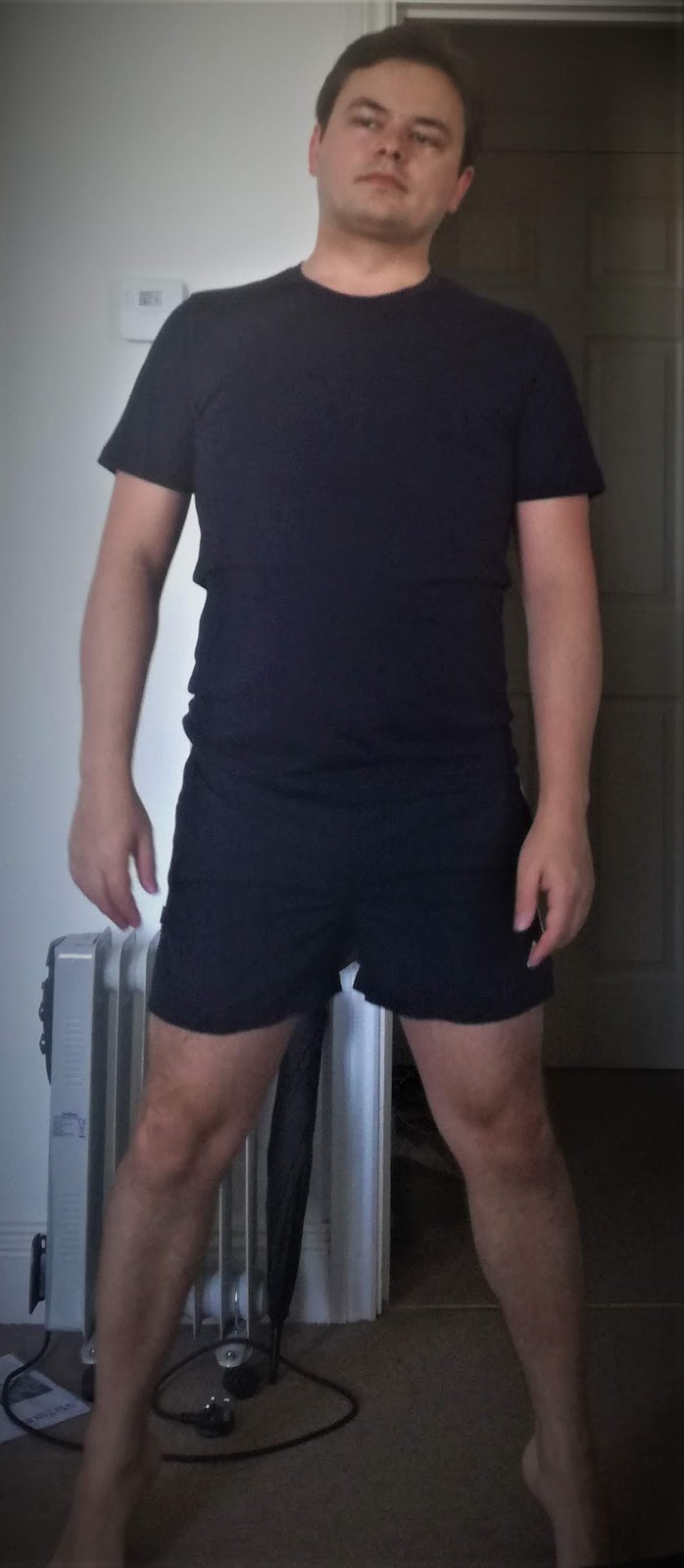
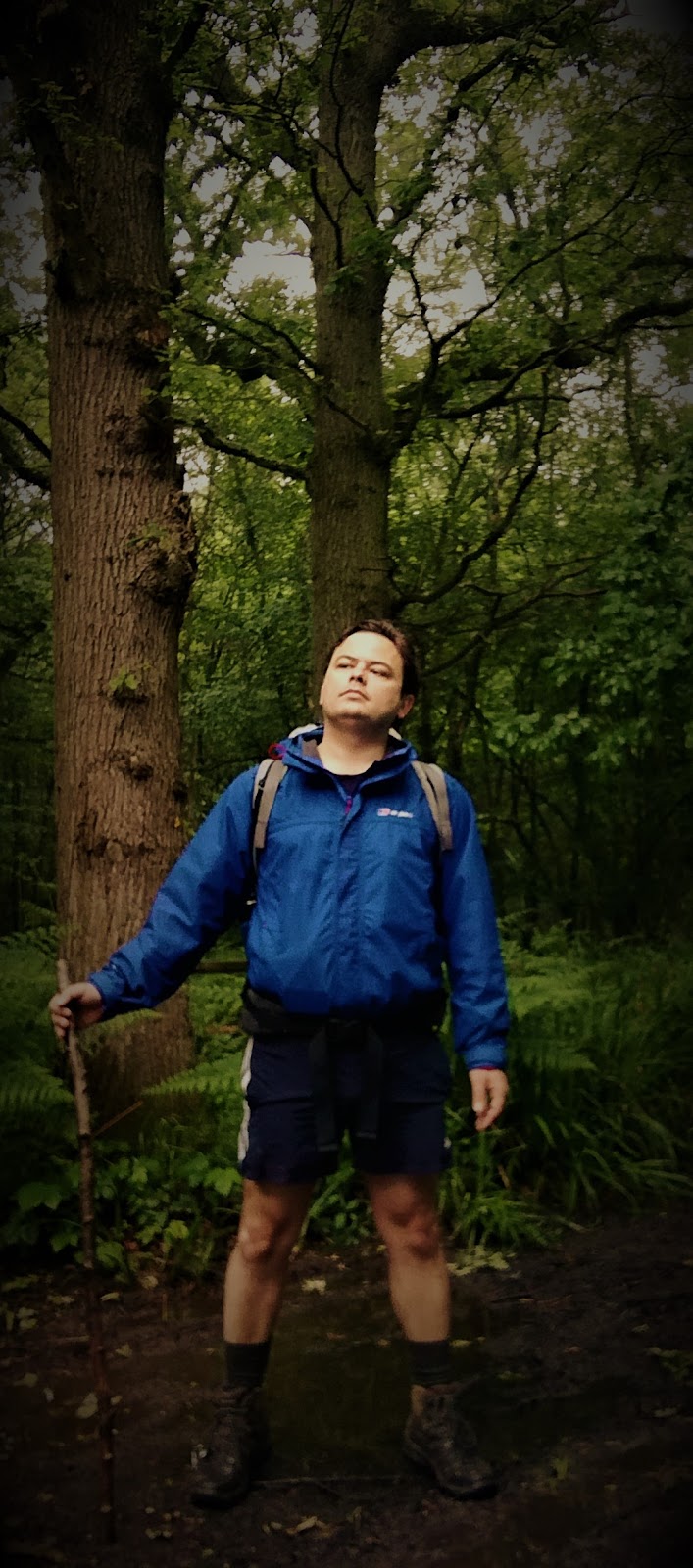
The Tory power pose. Over the course
of the journey, this became my emblem.

Day 1: Monday, 28th of May

The following entries are transcribed from records taken over the course of the journey. Click here for my video diary.

1300 at Brecknock Arms, Bells Yew Green

The first thing I said to myself this morning as I closed the door behind me was 'what am I doing?' ⸻ To which my other self replied, with a sense of a sigh, 'something. You are doing something.' And it is true. I am doing something, and I mean the overall endeavour for which I am preparing. For how easy is it to treat the half term break as a succession of easy lie-ins? Much too easy. Some computer games in the afternoon, perhaps an ale in the evening, maybe a day trip to London or a session on the Pantiles, but never, it seems, anything worth writing about. And I am too old now to be throwing my time away.

My guiding principle must be always this: do something worth writing about.

So I have come thus far [via Frant]. Not as far as I had hoped, but that is down mainly to the prevalence at this point in the route of roads over footpaths. The roads are dangerous; caution required; therefore slow going. This lunchtime ale is then well earned and much needed, but I dare not tarry long, for I have many miles ahead of me and I am quite hungry. 

2100: Cedar Gables Campsite, near Bewl Water

Probably for reasons of exhaustion and dehydration, I neglect in the following entry to describe the course of the day. The weather was hot and intensely sunny all through. I had planned to drop in at certain points for refreshment, but for different reasons these were all shut, so I had quickly run out of water with half the journey yet to tread. Finally, the campsite had basic facilities, including water, but was miles from anywhere that served food and drink, so I had to dine that night on my rations. These details would have seemed unimportant by the time I erected my tent and opened my notebook in the dusk.

This has been an ordeal. I am suffering. I am also doubtful. Can I do this?

It is precisely for these things I have done this. Not to feel comfortable all the time; not always to be sure of myself; to see if I can overcome these things. 

I believe I can at the same moment that I fear I can't. That is not a contradiction. 

I have not yet found in myself any great solace or meaning on this journey. But what exactly am I looking for? Revelation? Enlightenment?

Setting out on Day 2

Day 2: Tuesday, 29th of May

Morning, 0810

This morning I woke at 0500 to a symphony of birds. My God - they were loud. I have often heard them when waking early at home. But the sound in town is nothing to this.

For a while I lay in the dawn, in the noise, only guessing what time it was; my phone is quite depleted so I dared not switch it on. But then I turned it on and Lo! it was only 0500. Then I checked the weather, which said a monsoon was on the way. Discouraged, I rolled back over and slept a second time. 

It is now ten past eight. It is still pretty grim out there but I have to get moving soon. Perhaps I shall find advantage in the rain? For I got very dirty yesterday. But my feet still hurt and I really don't want to put those boots on.

*

There is beauty in the rain. Yes, there is also threat, even mortal danger at times. But that is true of the Sun, the sea, the chalk cliffs at Dover. Even as I watch it fall, awaiting my moment to let down my tent, pack my bag and make my way, it strikes me, the music that it makes and the new complexion it puts upon the visible world; and I wonder how much we owe to the rain. 

But were we not taught, long ago, to put these fond, romantic notions aside? And to see instead the irresistible and, to us, indifferent forces that are at work? The rain is gone anyway, and it is time I put my day into motion.


1500: Somewhere south of Hawkhurst

I am in the church of The Moor, Hawkhurst. Peaceful. I am grateful for the opportunity of rest as well as silence.

Today is quite different from yesterday. Grey, hazy, constant rumbles of distant thunder. So many prospects, I have thought, might have looked Italianate in the sun; it is storm clouds and rain that makes them English. 

But I seem no longer moved by the beauty of nature. It is not that I am innured to it, or even bored with it, but rather that its meaning has changed. No longer just glory and views and solitude but also hardship, danger and pain, to be endured and overcome.

Dusk: Campsite, near Bodiam

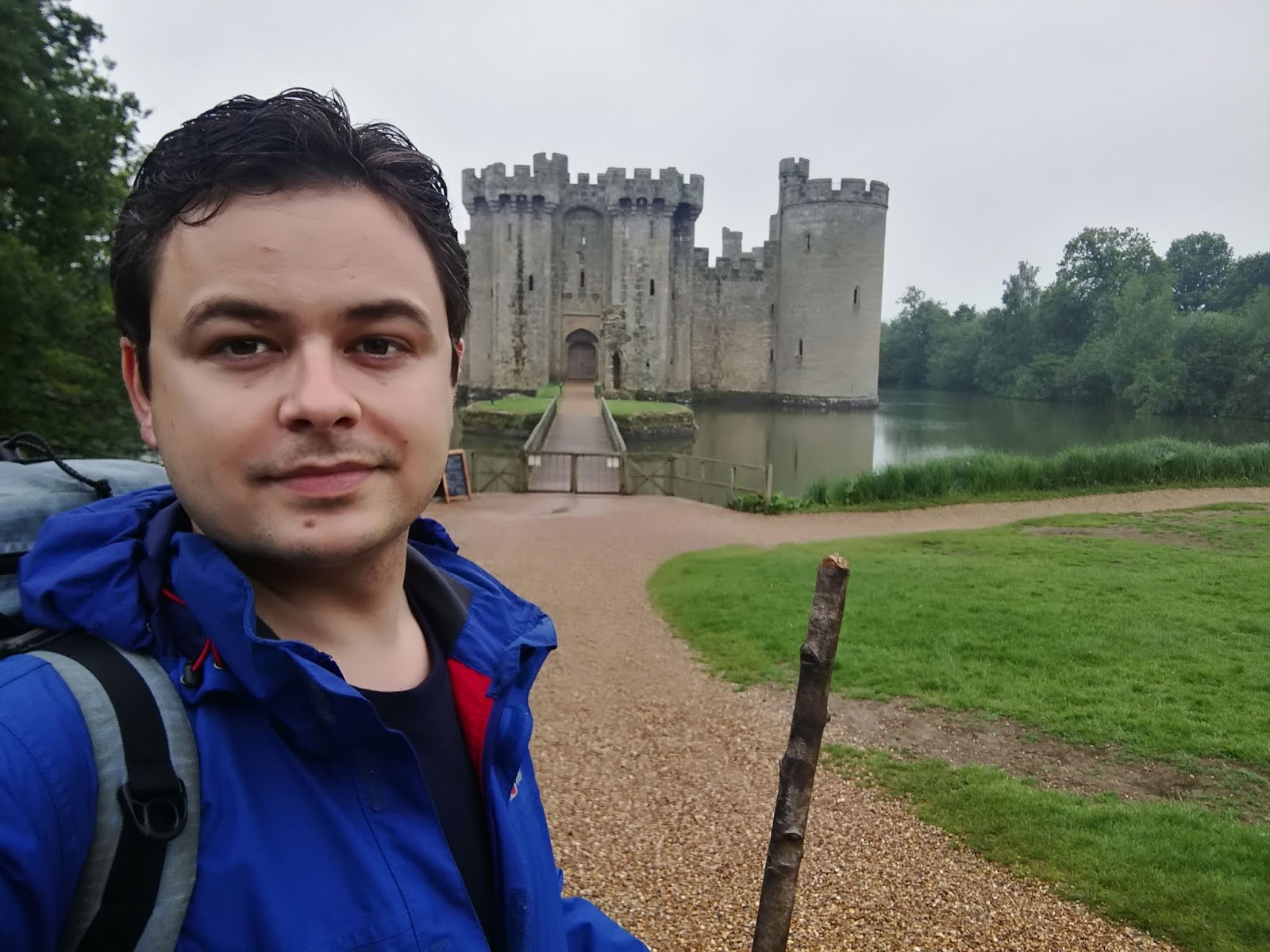
Bodiam
As with the previous day, the following entry is light on details of the progress of the day, which was marred by great difficulty only alleviated by a good supply of ale at various spots. South of Hawkhurst, most of the public paths were overrun with nettle bushes that reached as high as my chest. In heavy rain I spent much of my time and energy hacking through what ought to have been easy walking. At times I feared myself getting cut off, especially in the gathering darkness, and the fact that water had seeped into my boots made my spirits droop very low. It must be for these reasons I forgot about the amusing incident early in the day when I was chased off a field by a horde of free range hens. 

In the fading light I re-read Shropshire Lad. No. 2: mourning the passage of time and youth at the age of twenty. Curious, for it is now at the age of thirty one that I feel as the poem describes; the very feeling that explains why I am here. 

I do not like this place and I shall get out as early as possible tomorrow. In the fading light beneath the low hanging storm clouds I feel, looking at these tents and semi-permanent caravans strewn about in this nowhere, that I have accidentally strayed into Gehenna.

Today has been quite miserable, and I go to bed in half a mind to walk to Robertsbridge tomorrow for the first train home. We shall see. But for now, the light fails, and I must retire.

Day 3: Wednesday, 30th of May

Morning

Now I understand those prayers that cry out 'the night has passed' and give thanks to God 'for bringing us safely to this new day.' Damp. Hard floor. Noisy neighbours. Strong winds. Rain. Thunder and lightning. The morning is not exactly bright and glorious - the cloud is thick and the gloom is heavy - but there is light, and I am alive, and I can begin to make my preparations. 

*

I have been holding my boots and socks under the hand dryer. Unsurprisingly, they didn't dry overnight. I've managed to dry them a bit, but not to a crisp, and they certainly won't bear me to Hastings. And I am covered in bites, cuts and stings for which I have no relief. 

There is a Boots in Robertsbridge as well as a train station. The tendons at the top of my calf muscles are seriously tenderised and I do fear doing myself an injury.

Evening: Tunbridge Wells

Triumphant:
the Tory power pose after my safe return
I am home. Thank heavens. My legs are in agony - skin and muscle - and I have just emerged from a deep nap. 

The journey to Robertsbridge was far tougher than I had anticipated, and as bad as anything I encountered yesterday. In some respects it was worse. I am sure the problem stems from the intense and sustained sunshine on Monday and heavy rainfall thereafter, resulting in an explosion of growth which has engulfed every common footpath. The nettles yesterday were as tall as my chest; today, they were looking me in the eye. Added to the relentless stings upon my body, sustained as I hacked my way inch by inch through the overgrowth alongside miles of wetland: standing and hacking, hacking and standing; easy prey for mosquitoes; these things added together, I am in great pain now. 

But at least the journey to Roberstbridge was short - four miles, by my reckoning - and half of it was along road or pavement. But I realised as I went that I had made the right choice: I was never going to get to Hastings. Not like this. 

How do I feel about not getting to Hastings? Fine, actually. There would have been excellent bragging rights, of course, but there is no shame in facing facts when they are against you: it was out of the question, at this time and on this attempt. I now have a better feel for judging distances on a map, and it became obvious by last night that what I had planned for the third day would require a fourth to complete. 

It was also apparent that the paths south of Hawkhurst that had caused me such grief the day before were not just badly kept, as I had first thought, but in fact would be typically like this hereafter, as the land was clearly exploding with new growth. This induction was confirmed on my hellish walk to Robertsbridge.

And I was not properly equipped. It is not that I was negligent: it is partly for such experience that I undertook this trip. I had no long trousers to protect me against the nettles and insects. Why should I? Shorts have been perfectly adequate - nay, given the recent heat, desirable - on my recent shorter treks. And besides, considering how much space and weight in my bag was taken up by the tent, I had to make compromises with myself. And in this season, I shall also know better to take insect repellent and some cream for bites and stings. 

This is all to say that Hastings was a bridge too far. All things considered, I think I have walked thirty miles, though I shall need to check that on an OS map. That is no small achievement, and I can be satisfied with it. 

*

And in retrospect? It was odd being on the train, going home. I felt vindicated. I hardly noticed the world we were passing through, the beauty of this special place, for even if a glimpse was there, through the window, it appeared and was gone in the twinkling of an eye. No time to set one's sights upon it, or to think upon it. 

Even at a good speed on a direct and unfettered course the train took a good while getting to Tunbridge Wells. It was like a fast rewind of all that I had done, and I felt deeply satisfied therefore, especially passing Frant, which, as I had learned on my journey, is not in Frant. But it also revealed to me how much of our land is measured in time, not miles. I know this is not an original observation but the force of it is new to me. The work of three days was undone in just over twenty minutes by a train. Upon foot, this land is vast, complex, almost impenetrable and actually quite dangerous. On a train, it is small, pretty, fleeting and harmless. It will be a while before I complain once more about the slowness of journeys in these parts, for I shall long bear in my mind what a transformation is there in how we view the world, first with the steam engine, then with the motor engine; and just how much at odds, possibly out of reach, our forebears' understanding of our shared space must be from our own. The only way to get the old country back, then, is to walk it.

*

I set out as a tourist of nature, a greedy sightseer of photogenic views. I return changed: those hills, trees, rivers and valleys don't look the same to me anymore. Nature is something to be reckoned with.

How clear my mind has become.