Showing posts with label Friends. Show all posts

Sunday, 27 January 2019

On Writing 'A January Tale'

On Writing A January Tale

I have nearly finished the typed draft of a new story, despite having been struck down and delayed with flu. I won't be able to show it to you for some time as I shall first seek some organ or other in which to publish it. If no one wants it, it will go on my website.

Outline

It tells the story of two friends who have long been estranged but who are seeking to rebuild their relationship, not really knowing how. The only thing they know is alcohol and the old habits through which they first became close, including a drinking game in which as students they used to compete to show their superior knowledge of literature. The game has many expressions, but in this case it involves naming the most iconic moments in literature. Before long, they begin naming moments that the other friend thinks is a loaded suggestion, and this soon becomes deliberate in a sequence of strike and counter-strike. So they launch their coded broadsides at each other through these proxy references, not knowing if they are killing something long sick, or else purging the body of its poison.

Origins

I have written before about friendship, especially male, and the idea has weighed on my mind since. After receiving recommendations from colleagues, including At Swim, Two Boys and The Body, I went for a long, late evening walk, as is my wont, wracking my mind. Eventually, as I was coming back to my flat, seemingly empty-headed, the idea of two chaps standing outside under the porch together coalesced with all the old stories I had been raking over as well as with the ideas about loneliness and distance that I had thought about for the recent blog post.

Development

The story clearly had legs. Firstly, it seemed to touch upon miscommunication, particularly of the male type, with which I am intimately familiar. There's that reluctance between men to open up and discuss anything, especially if it needs discussing, without the assistance of alcohol. It also touched upon that root of so much manipulation as well as miscommunication: the ability to pour your own meaning into something wide open to interpretation.  

But it also offered a glimpse into what often brings men together in the first place, that of the shared endeavour or activity. Such a preposterous little game would seem odd to a casual observer, but like any game, it has rivalry, frisson and, above all, something in common. Being particular to a small group, or a pair, would only recommend it to them even more as something unique, their own little world.

It is part of the question of the story: will it be enough? It might have been when they were under-ripe undergraduates, but much has passed since then. It is part of my own experience to find the things that as a student I thought were the most important things in the world don't really matter any more, and the games we played have been locked away with all our other toys. There's also a part of me, a very big part (some might suggest the greater part) that is still more boy than man, even if I do have a mortgage now. Reviving an old game like this might be desperate, and it might be too late; it might also work.

This game, and all else that such men might have in common, opens up an opportunity to explore something else I have long been thinking about, which is a kind of negative capability, the author putting things out of view, making something that is visible to the reader or audience still mysterious and private between the characters. (I shall write more extensively on this idea later.) When both characters speak through proxy references, they hint at things which we can, at best, only partially understand, either because we have insight already, or else because we know the content of the literary references. Yet we can't know, unless I reveal to us, quite what these references mean to each man, or why one would be conciliatory and another be provoking. 

Next steps

The foul hand manuscript all done, the typescripts half done, and the leg-work in finding a place to send it not yet done, and the waiting that follows not nearly begun, it will be a while before anyone sees it. Most organs take three months, sometimes as much as six, to ignore you and not reply, so you have to keep close watch on all your submissions. None has yet accepted one of my submissions so I hold no great hope. But that can always change.

Sunday, 6 January 2019

Male Friendship in Literature (especially that which is new)

Male Friendship in Literature (especially that which is new)

The problem emerges

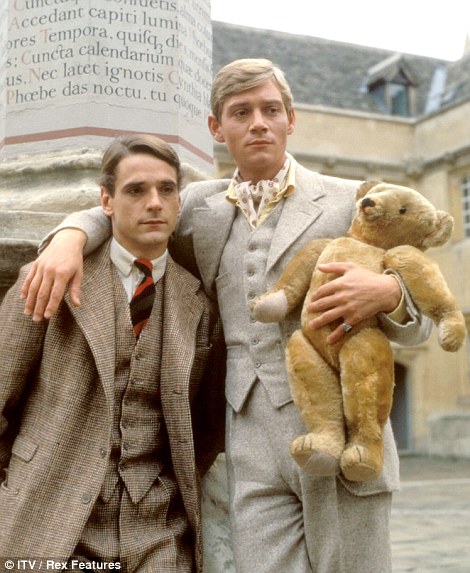
Image result for brideshead
Too painful at my age
Upon a Friday evening spent alone, at home, I searched my DVDs for a story to keep me company and comfort me, specifically on the theme of friendship. I quickly became frustrated. Lord Of The Rings? Too long, too familiar and quite old. Brideshead? Much too painful for a man my age. Sherlock? Gets hysterical. Yet what else was there? Precious little. 

So I turned to literature. 

Lord Of The Rings? Brideshead? I could see a problem emerging: everything was either familiar or old. Or both.

I consulted the internet. There were a few more suggestions. Mice and Men? Please, I'm an English teacher. Lord Of The Rings was another. Brideshead Revisited another...

So I consulted my friend, Bryan. He suggested Lord Of The Rings, Mice and Men...but he added to the tally some suggestions from classic Russian literature, quite a lot of friendship in Shakespeare, including Hamlet and Horatio, and in 19th century prose, such as Bingly and Darcy and some others in Dickens. Then we discussed the problem over the phone, and agreed that, as far as we could tell, there was not much noteworthy writing on this theme from the last fifty years, and nothing we could name. 

Then he made a couple of suggestions that really got me thinking. Maurice? Dorian Grey? No, I said. That would not do: they are romantic. But so what? What is the essential difference? I said at the time, and I think I was more right than I realised, that there was something delicate, mysterious, sweet and tantalising about friendship, especially between men, whereas depictions of romance are more obvious, predictable, digestible and, frankly, formulaic. 

Digging further

Internet searches revealed a number of interesting things:
  1. Lists of 'top ten' etc. fictional male friendships are repetitive, and much of it is old
  2. Male friendship currently is better served in film and television than in literature
  3. From some quarters there appears to be even some hostility towards it featuring in new literature
  4. Given how lonely men are becoming, with around 2.5 million men having no friends, and how difficult men find it to make and keep friends, there is surely a need to discuss male friendship in current writing
  5. Male friendship makes people uncomfortable.
I want to dwell on points 2 and 5 together first. 

Putting aside direct page-to-screen adaptations, I could name a few titles, not all of which I have seen, or seen in full, which take up this theme. The problem I have with them is that they intensify what I would call the histrionics, to the point where I no longer recognise the friendship for what it is. Take Sherlock, for instance. It starts really well: two lonely misfits who find one another, and, especially Watson, find new life through one another. However, by the third series, and through into the fourth, their relationship starts revelling in the caricatures and fantasies of the fan base (more on that later) and morphs deliberately into a surrogate romance. Similarly with House MD, which is obviously based on the Sherlock Holmes stories. When House has his difficulties or when Wilson starts to die, the dynamic becomes weepy and saccharine. 

This speaks of two problems:
  • Friendship is undervalued as a theme; less important than romance or family. Two close friends who remain close friends won't do, as friendship simply is not enough: they must become something more. 
  • Friendship is not understood. It is precisely because friendship is naturally undramatic, normally, that it is so important and valued: conversation, quality time, nights out, confidants' advice, etc. This is quite apart from the war of nerves, anxiety and high-stakes conflict and resolution that goes with romantic interest but which, by contrast, make romantic relationships less stable, reliable and all too often less enduring. 
Sometimes the friendship is put under test, such as one friend falling ill, which is a naturally more revealing test of the depth of affection, but even then, the friendship, though demonstrative, remains for the most part undramatic. The best recent depiction of this that I have seen is the film 50/50, in which Seth Rogen's character is a doughty rock throughout his friend's ordeal.
Image result for johnlock
This is mild.

The other, connected problem is that this topic seems to make people uncomfortable, as hinted at in the link on point 3 but more evident in the fan responses to things such as Sherlock and Lord Of The Rings. It is a common suggestion, made in countless pictures and fan fictions either hopefully or sneeringly, that the men must secretly have romantic feelings for each other: 'Johnlock' is a thing, as evinced by fan art, the featured image being the mildest I feel I can show. And the conversations around Samwise Gamgee and Frodo Baggins seem deliberately to overlook the origin of that friendship in the model of the British officer and his batman in the trenches. Certainly, such treatments do touch on the real ambiguity of some male relationships, in which the line between the platonic and the romantic is not always clear to the friends themselves. But they also speak of a need either to laugh the friendship off or to transform it into something more easily understood and categorised; an inability, as Keats might have put it, to enjoy the mystery without the irritating reflex of reaching after certainty.

Writing now

Image result for two boys at swim
Well reviewed and
worth investigating
I have mentioned 50/50 as a good modern treatment of male friendship that I know about, and the first two series of Sherlock as well. In terms of writing, I know of nothing very recent that has captured the public mood. I have heard of one title, At Swim, Two Boys, which seems promising but the synopses also indicate that the relationship becomes romantic. About a year ago I read The Gustav Sonata, which seemed promising at the start but quickly descended into the level of a first draft. It therefore seems to me that this is a topic and theme that is absolutely ripe for further exploration, both in pursuit of reading and of writing. 

Thursday, 29 December 2016

2016: The Wonderful Year

2016: The Wonderful Year


As told by a cast of many and featuring Edgar, the electric guitar.


2016: As told by Dekker

I borrow the title of this piece from Thomas Dekker, who wrote a pamphlet, thus titled, about the year 1603. In this context, the adjective 'wonderful' did not carry its positive connotations of something memorably jolly or praiseworthy, but was rather more descriptive: something to wonder at, be astonished by; something notable, not necessarily in a jolly way. 1603 saw plague in London, the death of Elizabeth and the accession - but not the coronation - of King James. Not, then, a settled year.

2016: As told by everyone, it seems

2016 would also seem to a be a wonderful year: a slew of high profile deaths; God knows what atrocities in the middle east; Brexit; and Trump. One tweet in particular, I thought, captured the prevalent mood, at least online.

Humorous as this is, it also seems to tell a truth that 2016 was a particularly fatal year; but you have to buy into that truth before this tweet become meaningful; and I do not particularly buy into this truth at all.

2016: As told by me

Truth be told, I have had a great year, and I don't think I'm the only one. My career goes well, my relationships are solid, and I am finding more time (at a squeeze, admittedly) for music, reading and sport.

Beyond my own circumstances - for it wouldn't do to crow - I do not find this to have been the news-disaster year of common repute either. The celebs who have died are of a generation; that generation is now going to start passing away, and keep going well past 2017:

Thou know'st 'tis common: all that lives must die,
Passing through nature to eternity.

Syria is undoubtedly ghastly news; but every year has bad news. This is the real low of 2016, but it does not mark this year as being especially vile, for the war has raged a long while now.

I did not wish for Trump to win, but there is a feeling in me, deep down, that the American voters understand Trump and Clinton much better than we do; I cannot judge them for their choice, nor do I pretend to understand the likely consequences. But as I look at America now, divided unlike it has been in many years, and as I look at the wreckage of Obama's non-leadership abroad, I cannot weep for the Democrats or the repudiation of the things they stand for; nor can hide my anxieties for what Trump means for the future of NATO.

And as for Brexit - well, like 1999 and 2012, that's another Armageddon that has failed to materialise. The reaction to the vote has been disappointing, with some people absolutely determined to see catastrophe unfold and for Britain to disintegrate, just in order to vindicate a smug smile and one of those 'I told you so' gloats. But I can't help but feel immense optimism. The vote itself seems to have breathed new life into our political process; the divisions that have been exposed have forced a long overdue national self-reflection, uncomfortable though it be at times; and given how unsuccessful - and worse - the EU has shown itself to be, how can it be that we can't survive without it? I am convinced we can do better than survive - we can flourish; but we could do without the dreary carping and whining, thanks.

2016: As told by Edgar, the electric guitar

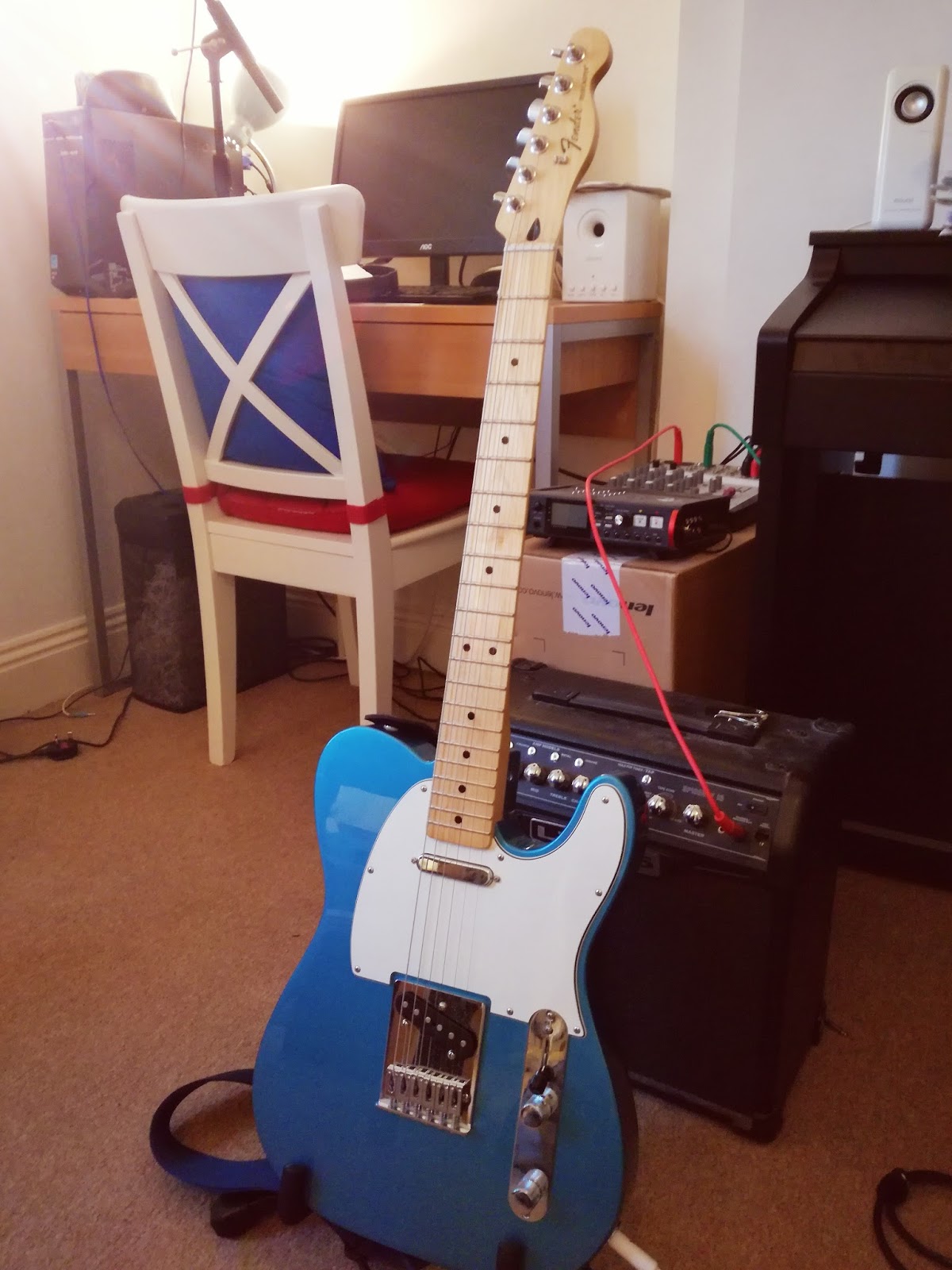
Meet Edgar, the latest addition to my family:
I am most grateful to my father for gifting me Edgar.

Edgar is a Fender Telecaster (MX Standard, for those who know). Edgar has a beautiful voice, and he can really, really sing.

The story of Edgar's name will shed some light on the year that has passed, more meaningfully perhaps than all the straightforward stuff I have written above.

Edgar's serial number begins with MX16. I looked up the coding patterns and, sure enough, this means that the guitar was built in 2016, so this year is his 'birthyear'. (Wonderful year indeed!)

Hitherto, I had long been scratching around for a name. My custom is to name my guitars like I name my cars: after characters from Shakespeare's plays. My older guitar was an easy case, for his lean and hungry looking body shape ideally suited Caesar's description of Cassius's 'lean and hungry looks': so, Cassius it was.

But look at Edgar. He's beefy, but stately; muscular and athletic, but also comfortable and smooth. I thought of Prince Hal; but inexplicably, he just isn't Hal.

But then the mood around this year fell upon me, and I was put in mind of that most distressing of tragedies, King Lear. Basically, most people die; Lear having first gone mad and left for dead in a howling storm, and Gloucester having been blinded and attempted suicide. But at the end, there is a small band of survivors, on whose behalf young Edgar, who endured and survived betrayal, a man-hunt and near fatal exposure to the elements, speaks the closing lines:

The weight of this sad time we must obey,
Speak what we feel, not what we ought to say.
The oldest hath borne most. We that are young
Shall never see so much, nor live so long.

These elegiac words, so tenderly phrased, seemed to me more apt a summary of the times than any sneer, whine, rant, GIF, meme or any other cyberflotsam I had seen drifting around the interweb. After an especially fatal time, Edgar here acknowledges the passing of a whole generation, and not just a particular band of characters. His imperative that we must express what we 'feel' rather than what we 'ought to say' acknowledges also that the times have changed, that the ground has sifted, and that those surviving must face facts and take it all in hand, as ordinary protocol will no longer suffice. The fact, then, that Shakespeare has a young man speak the final words of the play is an expression of optimism, for the burden now falls to young Edgar and his generation, and Edgar acknowledges the future as his, with humility.

So, Edgar it is. Wonderful year, i'faith.

Wishing everyone a happy 2017.