Showing posts with label television. Show all posts

Sunday, 13 January 2019

Can Writing Heal the Brexit Wounds?

Can Writing Heal the Brexit Wounds?


Channel 4: Uncivil War

I have not seen the recent Channel 4 drama, Uncivil War. I doubt I will. I expect it will be too painful. But I have heard much in its praise, especially from partisan sources on social media which suggest it does not take sides and that it paints no one in a particularly flattering light. One comment I saw - from a leave supporter - suggested that anyone who was able to watch it without reflecting upon their own position was beyond reason. 

This got me thinking about how art might start to respond to events. It has to respond at some point, but because we are still undergoing the process, it is less able to do so, unable as I think we are to take a clear perspective on things. But perhaps the time is arriving, and this drama in particular is the first sign of art trying to help us process the pain?

Healing

Some kind of healing will be necessary. The archbishop of Canterbury has called for some government leadership in order to facilitate this, though I wonder if, rather than imploring the government, it were better the church seize the initiative and do it instead. Either way, he is right that this mood cannot be allowed to fester. He has a model to follow in this in the Church of Scotland, which held a service of unity following the 2014 referendum, though I know of none of its work in this area since that time. 

But what of the rest of us? Just as I argue Welby cannot simply wait for the government to take the lead but should seize the initiative himself, so too I argue the rest of us have a duty to do the same, whatever our place in society. If I am right about Uncivil War, then television and drama might already have made a start here. 

Harming

There is, of course, a danger. Words can heal, and words can harm. A cursory glance over social media should reveal just how ghastly some people are determined to be right now. Even in more formal work, there will be a number of people who relish opening fire at those who vote differently to them, or share a different vision. Such behaviour is the outcome of a petty mind, impossible to reason with; the product of character that desires not to reconcile but only to denounce. Most recently, the BBC version of Poirot at new year falsified history in order to associate the leave vote with fascism, so it has already started. I therefore state, with total confidence, that poisonous, tendentious and polemical work will naturally constitute the weakest work, most worthy to be disposed.

The form it should take

As suggested above, the perspective that time lends to us will enable us better to make sense of what we have been through, and I don't believe we are securely in that place, even if one good drama has made a start. Sometimes, these events will need to be tackled head on. At other times, it might help to explore these things through allegory.

It is easy to conjecture how. Take some of the factors of these times:
  • long term friends falling out
  • irreconcilable interests between different parties, factions or groups
  • paranoia, denunciation, suspicion
  • political rhetoric and its power for good and ill
  • identity
  • borders
and anything else you care to mention. All of these things can be discussed in drama, literature, art, music, whatever, without having to revive the myriad ghosts that lurk behind the spectre of Brexit, and this might help to reduce the inflammation. 

My own contribution

I have a first draft of a novel which does some of what I argue for, totally by accident. The story requires a hard political border and tension between two states. I invented a parallel world in which one of those states is the former capital city of the other, but which seceded several generations before. I conceived of the idea before the 2015 general election, when Brexit had not come into view, whilst out walking on Southborough common, soaking up the beauty of the place in the sunshine and contemplating the difference between my life in Kent and my old life in London. But if anyone were to read it now, not knowing these things, they would naturally see Brexit in it. I am comfortable with that. My world being a false creation, I can present secession without presenting a view on it, or alienating those who do come to it with their own views. 

Now I just need to redraft and get the blasted thing published.

Conclusion

It helps that I conceived of this story before Brexit, for I might not have been able to handle it so dispassionately in this atmosphere. But that only makes it more urgent that we try: feeding feuds and despising your neighbour, chewing the gristle of old grudge - this is easy, even satisfying; to reconcile requires good will and determination, which is in short supply at present. That is why Welby, and all of us who desire to reconcile, should find ways, including ans especially in writing, to seize the initiative, for otherwise we will be in the power of those who relish discord.

Sunday, 6 January 2019

Male Friendship in Literature (especially that which is new)

Male Friendship in Literature (especially that which is new)

The problem emerges

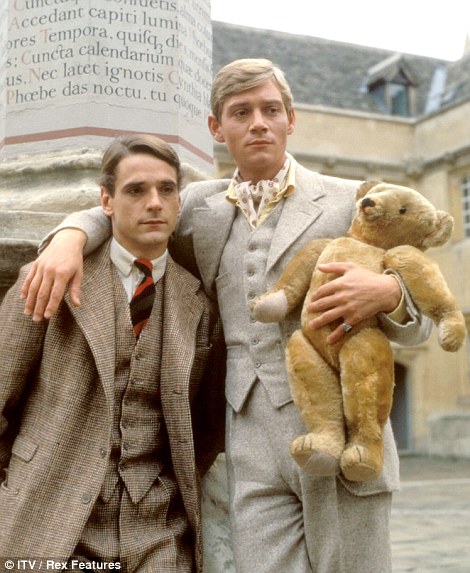
Image result for brideshead
Too painful at my age
Upon a Friday evening spent alone, at home, I searched my DVDs for a story to keep me company and comfort me, specifically on the theme of friendship. I quickly became frustrated. Lord Of The Rings? Too long, too familiar and quite old. Brideshead? Much too painful for a man my age. Sherlock? Gets hysterical. Yet what else was there? Precious little. 

So I turned to literature. 

Lord Of The Rings? Brideshead? I could see a problem emerging: everything was either familiar or old. Or both.

I consulted the internet. There were a few more suggestions. Mice and Men? Please, I'm an English teacher. Lord Of The Rings was another. Brideshead Revisited another...

So I consulted my friend, Bryan. He suggested Lord Of The Rings, Mice and Men...but he added to the tally some suggestions from classic Russian literature, quite a lot of friendship in Shakespeare, including Hamlet and Horatio, and in 19th century prose, such as Bingly and Darcy and some others in Dickens. Then we discussed the problem over the phone, and agreed that, as far as we could tell, there was not much noteworthy writing on this theme from the last fifty years, and nothing we could name. 

Then he made a couple of suggestions that really got me thinking. Maurice? Dorian Grey? No, I said. That would not do: they are romantic. But so what? What is the essential difference? I said at the time, and I think I was more right than I realised, that there was something delicate, mysterious, sweet and tantalising about friendship, especially between men, whereas depictions of romance are more obvious, predictable, digestible and, frankly, formulaic. 

Digging further

Internet searches revealed a number of interesting things:
  1. Lists of 'top ten' etc. fictional male friendships are repetitive, and much of it is old
  2. Male friendship currently is better served in film and television than in literature
  3. From some quarters there appears to be even some hostility towards it featuring in new literature
  4. Given how lonely men are becoming, with around 2.5 million men having no friends, and how difficult men find it to make and keep friends, there is surely a need to discuss male friendship in current writing
  5. Male friendship makes people uncomfortable.
I want to dwell on points 2 and 5 together first. 

Putting aside direct page-to-screen adaptations, I could name a few titles, not all of which I have seen, or seen in full, which take up this theme. The problem I have with them is that they intensify what I would call the histrionics, to the point where I no longer recognise the friendship for what it is. Take Sherlock, for instance. It starts really well: two lonely misfits who find one another, and, especially Watson, find new life through one another. However, by the third series, and through into the fourth, their relationship starts revelling in the caricatures and fantasies of the fan base (more on that later) and morphs deliberately into a surrogate romance. Similarly with House MD, which is obviously based on the Sherlock Holmes stories. When House has his difficulties or when Wilson starts to die, the dynamic becomes weepy and saccharine. 

This speaks of two problems:
  • Friendship is undervalued as a theme; less important than romance or family. Two close friends who remain close friends won't do, as friendship simply is not enough: they must become something more. 
  • Friendship is not understood. It is precisely because friendship is naturally undramatic, normally, that it is so important and valued: conversation, quality time, nights out, confidants' advice, etc. This is quite apart from the war of nerves, anxiety and high-stakes conflict and resolution that goes with romantic interest but which, by contrast, make romantic relationships less stable, reliable and all too often less enduring. 
Sometimes the friendship is put under test, such as one friend falling ill, which is a naturally more revealing test of the depth of affection, but even then, the friendship, though demonstrative, remains for the most part undramatic. The best recent depiction of this that I have seen is the film 50/50, in which Seth Rogen's character is a doughty rock throughout his friend's ordeal.
Image result for johnlock
This is mild.

The other, connected problem is that this topic seems to make people uncomfortable, as hinted at in the link on point 3 but more evident in the fan responses to things such as Sherlock and Lord Of The Rings. It is a common suggestion, made in countless pictures and fan fictions either hopefully or sneeringly, that the men must secretly have romantic feelings for each other: 'Johnlock' is a thing, as evinced by fan art, the featured image being the mildest I feel I can show. And the conversations around Samwise Gamgee and Frodo Baggins seem deliberately to overlook the origin of that friendship in the model of the British officer and his batman in the trenches. Certainly, such treatments do touch on the real ambiguity of some male relationships, in which the line between the platonic and the romantic is not always clear to the friends themselves. But they also speak of a need either to laugh the friendship off or to transform it into something more easily understood and categorised; an inability, as Keats might have put it, to enjoy the mystery without the irritating reflex of reaching after certainty.

Writing now

Image result for two boys at swim
Well reviewed and
worth investigating
I have mentioned 50/50 as a good modern treatment of male friendship that I know about, and the first two series of Sherlock as well. In terms of writing, I know of nothing very recent that has captured the public mood. I have heard of one title, At Swim, Two Boys, which seems promising but the synopses also indicate that the relationship becomes romantic. About a year ago I read The Gustav Sonata, which seemed promising at the start but quickly descended into the level of a first draft. It therefore seems to me that this is a topic and theme that is absolutely ripe for further exploration, both in pursuit of reading and of writing.