Friday, 1 June 2018

Journey Through Kent and Sussex: A Journal

Journey Through Kent and Sussex: A Journal

The following passages are taken from my journal, those segments concerning my attempt to walk to Hastings from Royal Tunbridge Wells between the dates of Monday 28th of May and Wednesday 30th of May, 2018.


Sunday, 27th of May
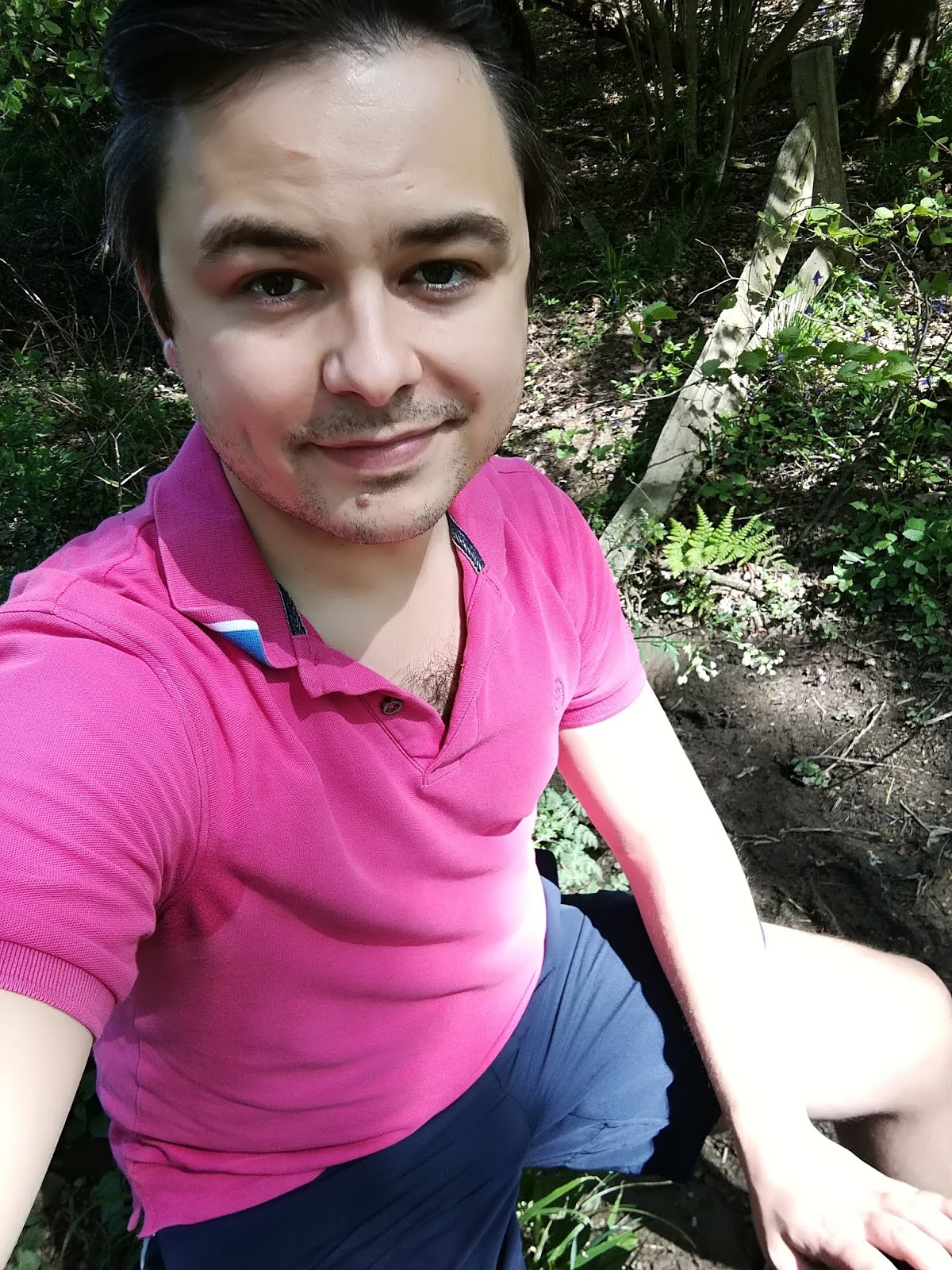
On the Bluebell Line
Tomorrow, I begin a great trial and test. I shall walk to Hastings. All that there is to sustain me and keep me shall be on my back; and it is a heavy load indeed. But I am looking forward to it and eager to start.

This is the culmination of the self-training I have undertaken in preparation for my pilgrimage in the Summer holidays. That should take around two weeks, perhaps more, and I shall have much to do even after this trip. But so far, I have only done single-day trips and this is the first time I shall be out in the wild and walking day after day. 


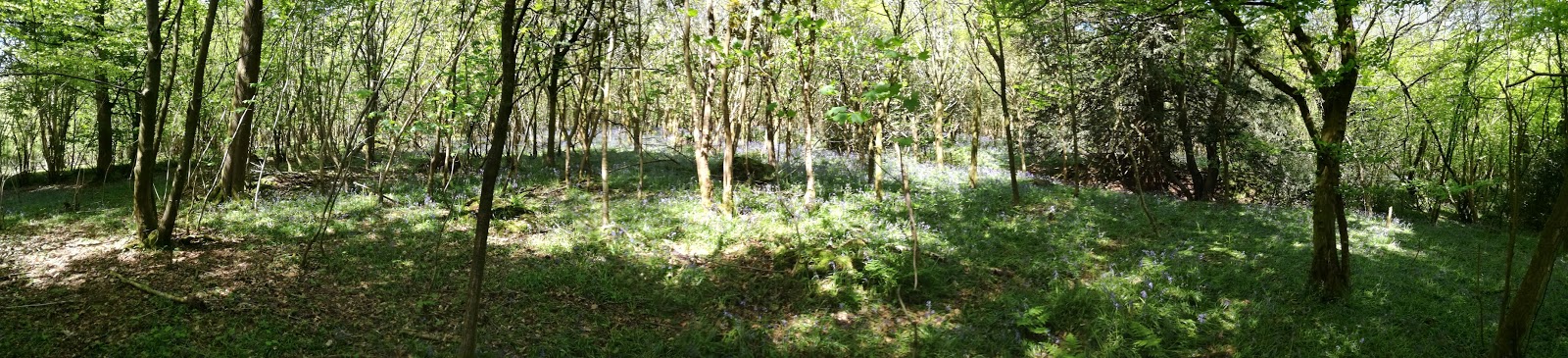
My first preparatory trek was to the Bluebell Railway, timed to catch the bluebells in bloom. That really was glorious, so beautiful, and a great success as well as instructive. I was well prepared nutritionally but very poorly prepared for navigation, having to rely on my phone for its GPS. I was not able to make it all the way to Sheffield Park as the train timetable was against me, and had I pressed on from Horsted Keynes I would have found myself stranded. I took many audio clips of my thoughts along the way and many pictures, all of which I am yet, to my shame, to knock together and transcribe into a blog piece.
For the second trip I set upon the task of improving my navigation. I prepared OS maps and banned myself outright from using my phone. Alice Hardy came with me, keen for the opportunity to trek somewhere, as far as Penshurst. It is just as well, for she could read the map better than I could. The first leg, to Penshurst, was much the loveliest, with rolling hills and valleys to please the eye and work the legs, and the sense of being alone and in possession of it all was thrilling. Alas, the leg to Tonbridge was less interesting visually and the paths were much busier, especially with cyclists, which I resented. An additional difficulty, when passing so many bodies of water, was the abundance of mosquitoes, and I regret to say they had a good drink at my expense. Nonetheless, I succeeded in my aim of navigating by map the whole way. 

So now I come to much the greatest challenge. The sheer weight of the bag; the unfamiliar nature of the route; the unforeseen circumstances for which I am doubtless unprepared, in spite of my best efforts; the succession of days walking; the length of solitude I shall endure; all these things, and more, shall put me sorely to the test. Yet, why not? For is this not the very point of pilgrimage? It is no package holiday and I am no tourist: to be a pilgrim is to be a lone journeyman, and that is to be one who undergoes trial. I relish the challenge, no matter how broken I shall be by the time I stand upon Hastings Pier. 

I have equipped myself with a notebook and pen, and for my evening's pleasure I am also bringing my copy of A Shropshire Lad. Its pastoral and nostalgic themes are most apt.

For the rest of this night, I shall take my rest. For the Sun now dips on this day, and plenty awaits me upon the morrow.
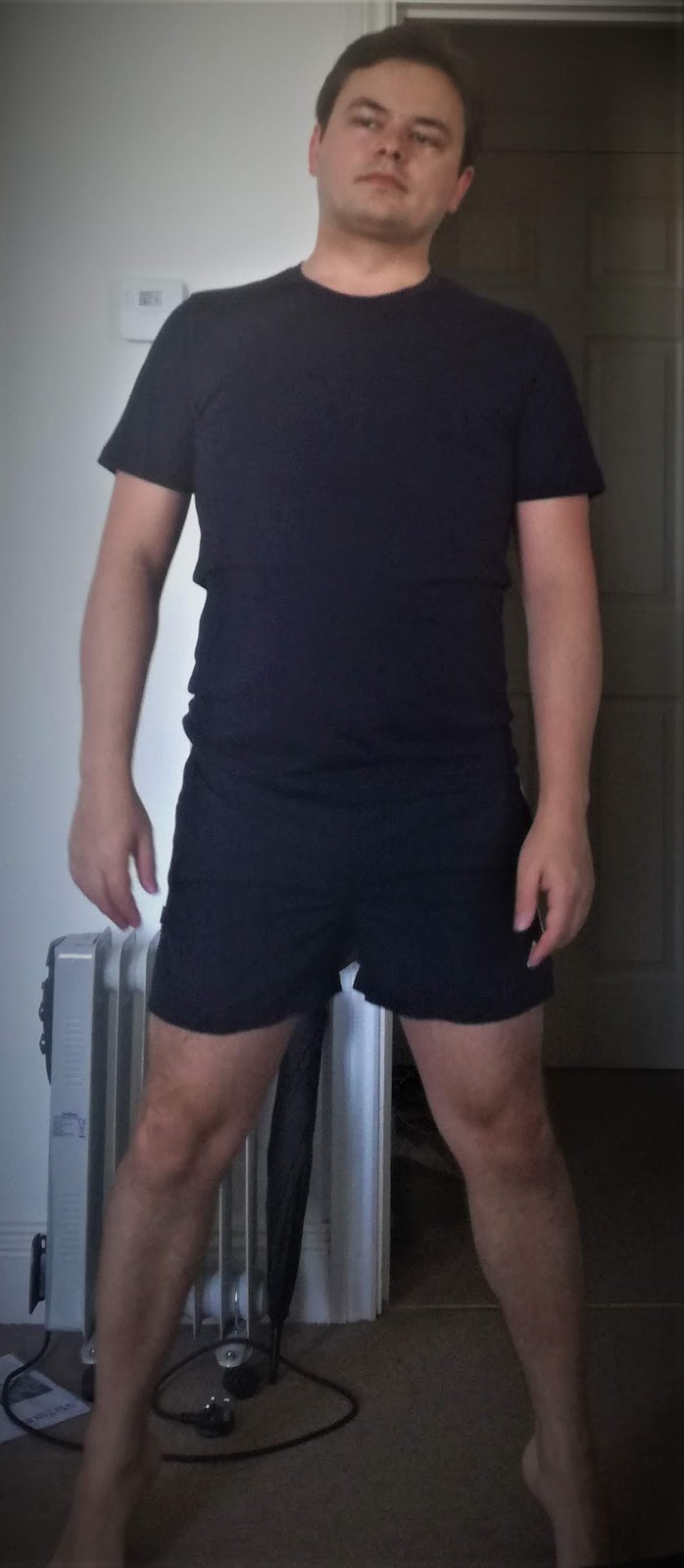
The Tory power pose. Over the course
of the journey, this became my emblem.

Day 1: Monday, 28th of May

The following entries are transcribed from records taken over the course of the journey. Click here for my video diary.

1300 at Brecknock Arms, Bells Yew Green

The first thing I said to myself this morning as I closed the door behind me was 'what am I doing?' ⸻ To which my other self replied, with a sense of a sigh, 'something. You are doing something.' And it is true. I am doing something, and I mean the overall endeavour for which I am preparing. For how easy is it to treat the half term break as a succession of easy lie-ins? Much too easy. Some computer games in the afternoon, perhaps an ale in the evening, maybe a day trip to London or a session on the Pantiles, but never, it seems, anything worth writing about. And I am too old now to be throwing my time away.

My guiding principle must be always this: do something worth writing about.

So I have come thus far [via Frant]. Not as far as I had hoped, but that is down mainly to the prevalence at this point in the route of roads over footpaths. The roads are dangerous; caution required; therefore slow going. This lunchtime ale is then well earned and much needed, but I dare not tarry long, for I have many miles ahead of me and I am quite hungry. 

2100: Cedar Gables Campsite, near Bewl Water

Probably for reasons of exhaustion and dehydration, I neglect in the following entry to describe the course of the day. The weather was hot and intensely sunny all through. I had planned to drop in at certain points for refreshment, but for different reasons these were all shut, so I had quickly run out of water with half the journey yet to tread. Finally, the campsite had basic facilities, including water, but was miles from anywhere that served food and drink, so I had to dine that night on my rations. These details would have seemed unimportant by the time I erected my tent and opened my notebook in the dusk.

This has been an ordeal. I am suffering. I am also doubtful. Can I do this?

It is precisely for these things I have done this. Not to feel comfortable all the time; not always to be sure of myself; to see if I can overcome these things. 

I believe I can at the same moment that I fear I can't. That is not a contradiction. 

I have not yet found in myself any great solace or meaning on this journey. But what exactly am I looking for? Revelation? Enlightenment?
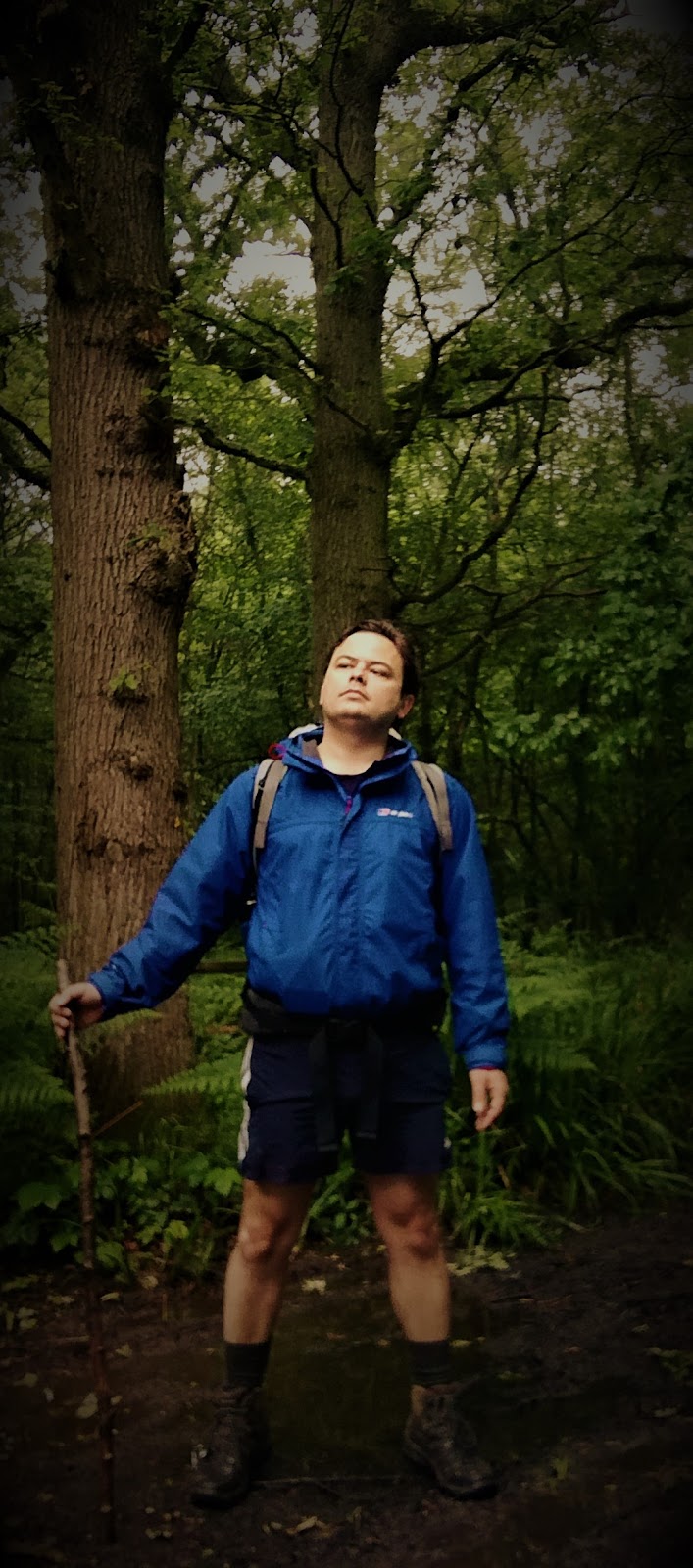
Setting out on Day 2

Day 2: Tuesday, 29th of May

Morning, 0810

This morning I woke at 0500 to a symphony of birds. My God - they were loud. I have often heard them when waking early at home. But the sound in town is nothing to this.

For a while I lay in the dawn, in the noise, only guessing what time it was; my phone is quite depleted so I dared not switch it on. But then I turned it on and Lo! it was only 0500. Then I checked the weather, which said a monsoon was on the way. Discouraged, I rolled back over and slept a second time. 

It is now ten past eight. It is still pretty grim out there but I have to get moving soon. Perhaps I shall find advantage in the rain? For I got very dirty yesterday. But my feet still hurt and I really don't want to put those boots on.

*

There is beauty in the rain. Yes, there is also threat, even mortal danger at times. But that is true of the Sun, the sea, the chalk cliffs at Dover. Even as I watch it fall, awaiting my moment to let down my tent, pack my bag and make my way, it strikes me, the music that it makes and the new complexion it puts upon the visible world; and I wonder how much we owe to the rain. 

But were we not taught, long ago, to put these fond, romantic notions aside? And to see instead the irresistible and, to us, indifferent forces that are at work? The rain is gone anyway, and it is time I put my day into motion.


1500: Somewhere south of Hawkhurst

I am in the church of The Moor, Hawkhurst. Peaceful. I am grateful for the opportunity of rest as well as silence.

Today is quite different from yesterday. Grey, hazy, constant rumbles of distant thunder. So many prospects, I have thought, might have looked Italianate in the sun; it is storm clouds and rain that makes them English. 

But I seem no longer moved by the beauty of nature. It is not that I am innured to it, or even bored with it, but rather that its meaning has changed. No longer just glory and views and solitude but also hardship, danger and pain, to be endured and overcome.

Dusk: Campsite, near Bodiam
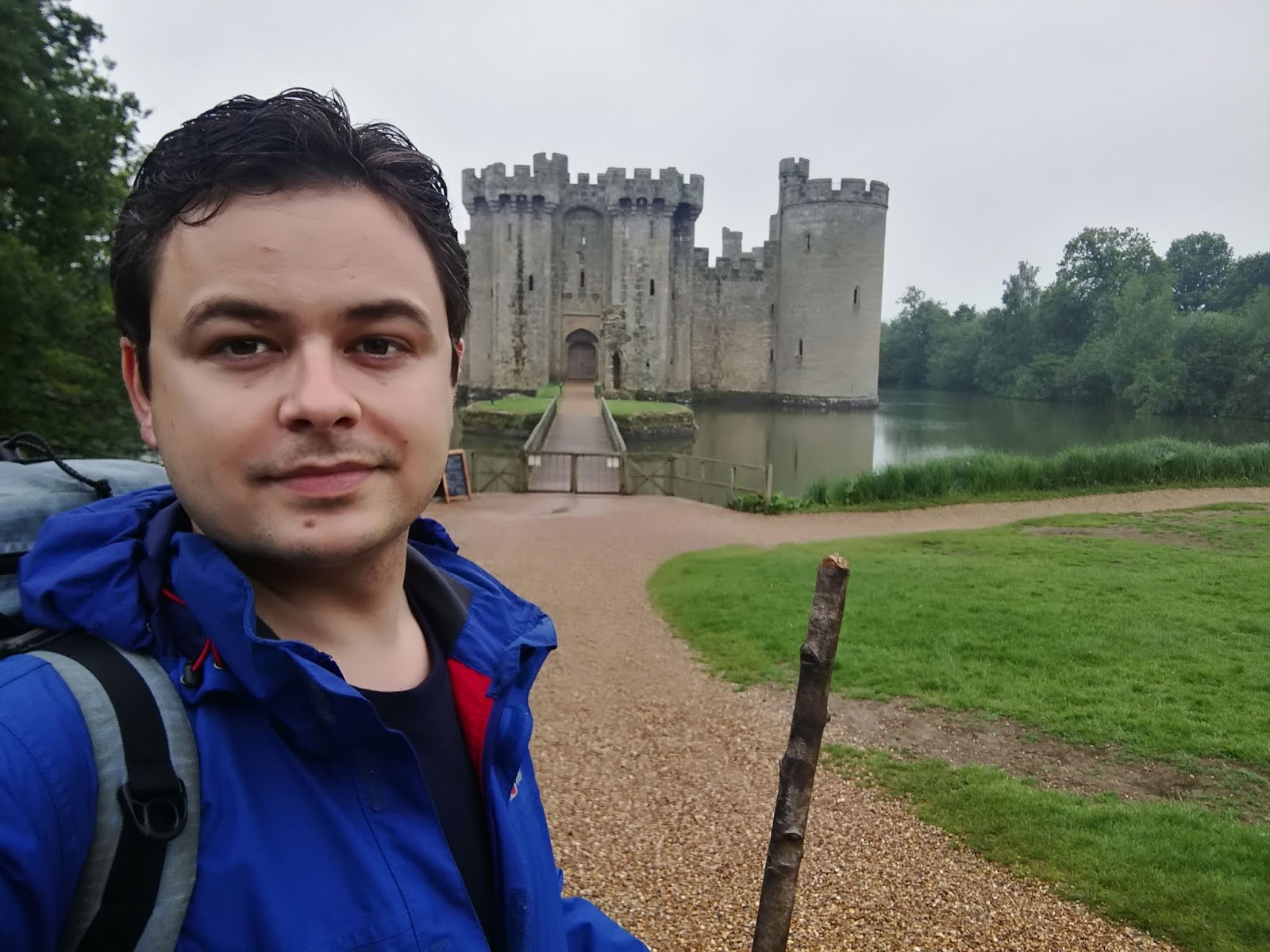
Bodiam
As with the previous day, the following entry is light on details of the progress of the day, which was marred by great difficulty only alleviated by a good supply of ale at various spots. South of Hawkhurst, most of the public paths were overrun with nettle bushes that reached as high as my chest. In heavy rain I spent much of my time and energy hacking through what ought to have been easy walking. At times I feared myself getting cut off, especially in the gathering darkness, and the fact that water had seeped into my boots made my spirits droop very low. It must be for these reasons I forgot about the amusing incident early in the day when I was chased off a field by a horde of free range hens. 

In the fading light I re-read Shropshire Lad. No. 2: mourning the passage of time and youth at the age of twenty. Curious, for it is now at the age of thirty one that I feel as the poem describes; the very feeling that explains why I am here. 

I do not like this place and I shall get out as early as possible tomorrow. In the fading light beneath the low hanging storm clouds I feel, looking at these tents and semi-permanent caravans strewn about in this nowhere, that I have accidentally strayed into Gehenna.

Today has been quite miserable, and I go to bed in half a mind to walk to Robertsbridge tomorrow for the first train home. We shall see. But for now, the light fails, and I must retire.

Day 3: Wednesday, 30th of May

Morning

Now I understand those prayers that cry out 'the night has passed' and give thanks to God 'for bringing us safely to this new day.' Damp. Hard floor. Noisy neighbours. Strong winds. Rain. Thunder and lightning. The morning is not exactly bright and glorious - the cloud is thick and the gloom is heavy - but there is light, and I am alive, and I can begin to make my preparations. 

*

I have been holding my boots and socks under the hand dryer. Unsurprisingly, they didn't dry overnight. I've managed to dry them a bit, but not to a crisp, and they certainly won't bear me to Hastings. And I am covered in bites, cuts and stings for which I have no relief. 

There is a Boots in Robertsbridge as well as a train station. The tendons at the top of my calf muscles are seriously tenderised and I do fear doing myself an injury.

Evening: Tunbridge Wells
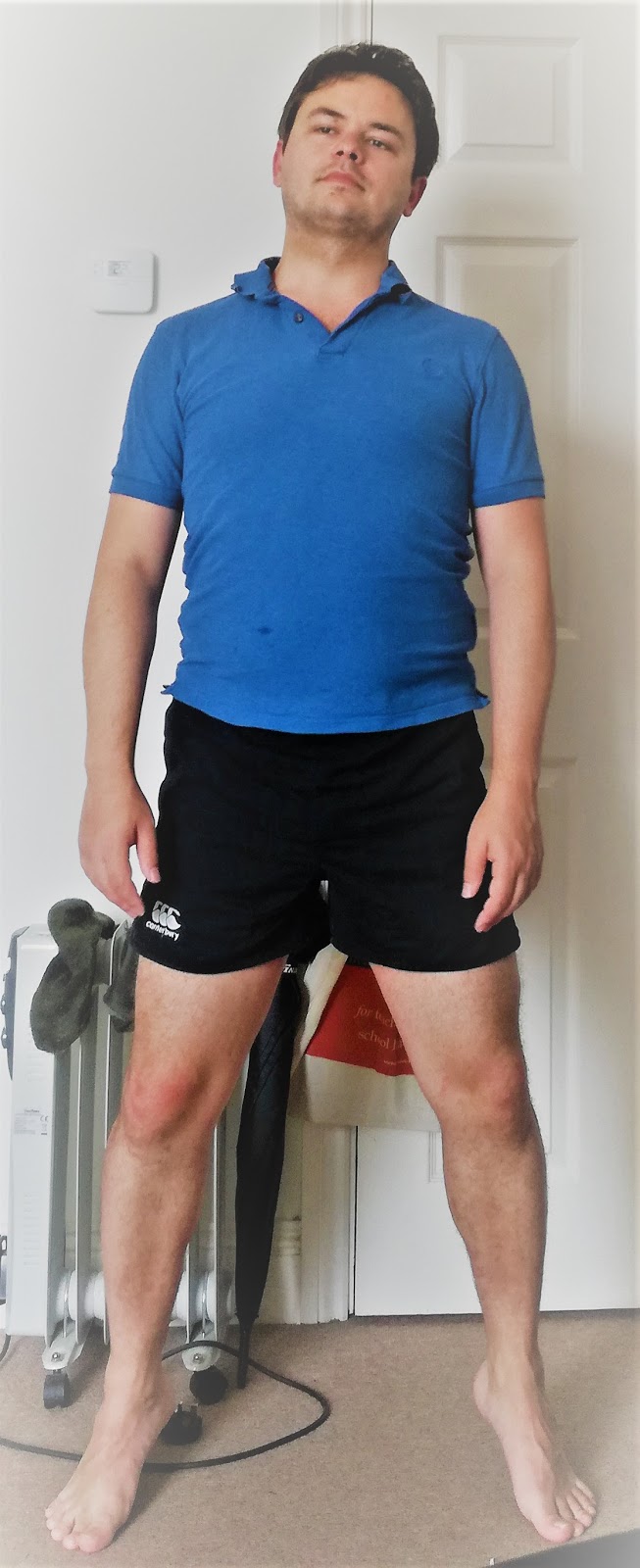
Triumphant:
the Tory power pose after my safe return
I am home. Thank heavens. My legs are in agony - skin and muscle - and I have just emerged from a deep nap. 

The journey to Robertsbridge was far tougher than I had anticipated, and as bad as anything I encountered yesterday. In some respects it was worse. I am sure the problem stems from the intense and sustained sunshine on Monday and heavy rainfall thereafter, resulting in an explosion of growth which has engulfed every common footpath. The nettles yesterday were as tall as my chest; today, they were looking me in the eye. Added to the relentless stings upon my body, sustained as I hacked my way inch by inch through the overgrowth alongside miles of wetland: standing and hacking, hacking and standing; easy prey for mosquitoes; these things added together, I am in great pain now. 

But at least the journey to Roberstbridge was short - four miles, by my reckoning - and half of it was along road or pavement. But I realised as I went that I had made the right choice: I was never going to get to Hastings. Not like this. 

How do I feel about not getting to Hastings? Fine, actually. There would have been excellent bragging rights, of course, but there is no shame in facing facts when they are against you: it was out of the question, at this time and on this attempt. I now have a better feel for judging distances on a map, and it became obvious by last night that what I had planned for the third day would require a fourth to complete. 

It was also apparent that the paths south of Hawkhurst that had caused me such grief the day before were not just badly kept, as I had first thought, but in fact would be typically like this hereafter, as the land was clearly exploding with new growth. This induction was confirmed on my hellish walk to Robertsbridge.

And I was not properly equipped. It is not that I was negligent: it is partly for such experience that I undertook this trip. I had no long trousers to protect me against the nettles and insects. Why should I? Shorts have been perfectly adequate - nay, given the recent heat, desirable - on my recent shorter treks. And besides, considering how much space and weight in my bag was taken up by the tent, I had to make compromises with myself. And in this season, I shall also know better to take insect repellent and some cream for bites and stings. 

This is all to say that Hastings was a bridge too far. All things considered, I think I have walked thirty miles, though I shall need to check that on an OS map. That is no small achievement, and I can be satisfied with it. 

*

And in retrospect? It was odd being on the train, going home. I felt vindicated. I hardly noticed the world we were passing through, the beauty of this special place, for even if a glimpse was there, through the window, it appeared and was gone in the twinkling of an eye. No time to set one's sights upon it, or to think upon it. 

Even at a good speed on a direct and unfettered course the train took a good while getting to Tunbridge Wells. It was like a fast rewind of all that I had done, and I felt deeply satisfied therefore, especially passing Frant, which, as I had learned on my journey, is not in Frant. But it also revealed to me how much of our land is measured in time, not miles. I know this is not an original observation but the force of it is new to me. The work of three days was undone in just over twenty minutes by a train. Upon foot, this land is vast, complex, almost impenetrable and actually quite dangerous. On a train, it is small, pretty, fleeting and harmless. It will be a while before I complain once more about the slowness of journeys in these parts, for I shall long bear in my mind what a transformation is there in how we view the world, first with the steam engine, then with the motor engine; and just how much at odds, possibly out of reach, our forebears' understanding of our shared space must be from our own. The only way to get the old country back, then, is to walk it.

*

I set out as a tourist of nature, a greedy sightseer of photogenic views. I return changed: those hills, trees, rivers and valleys don't look the same to me anymore. Nature is something to be reckoned with.

How clear my mind has become.

Friday, 14 April 2017

The Echoes Sessions

The Echoes Sessions: Easter, 2017

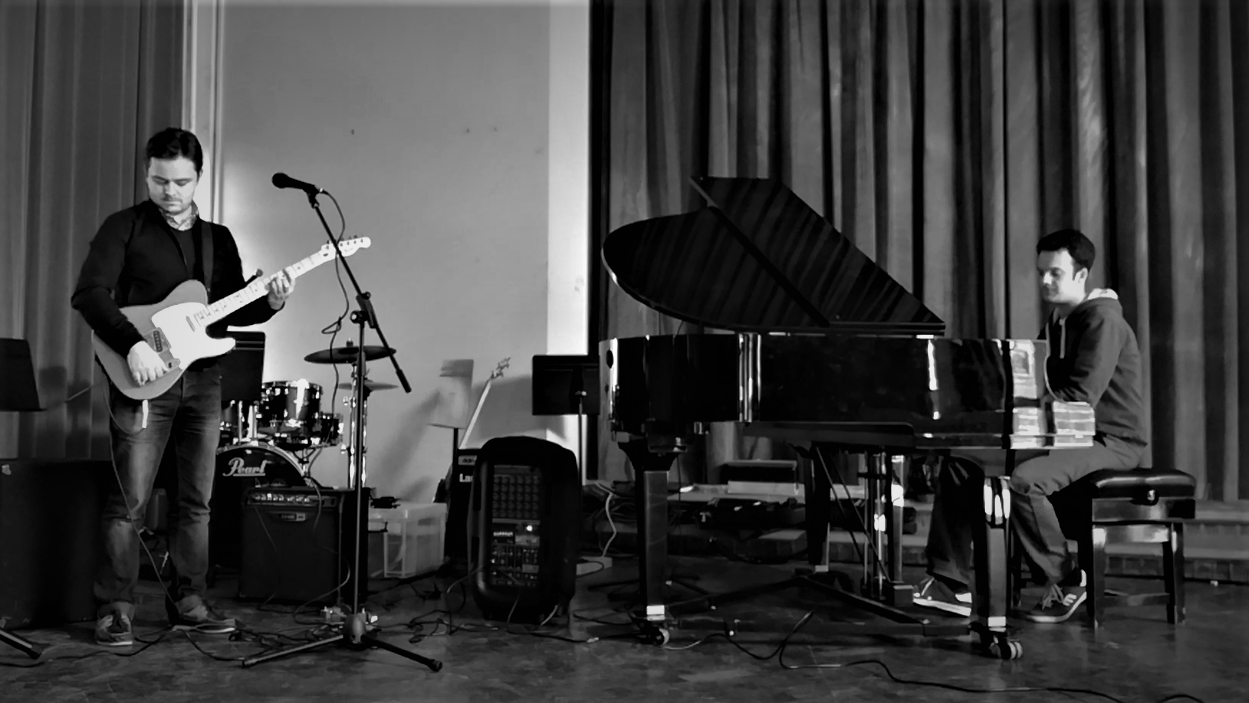
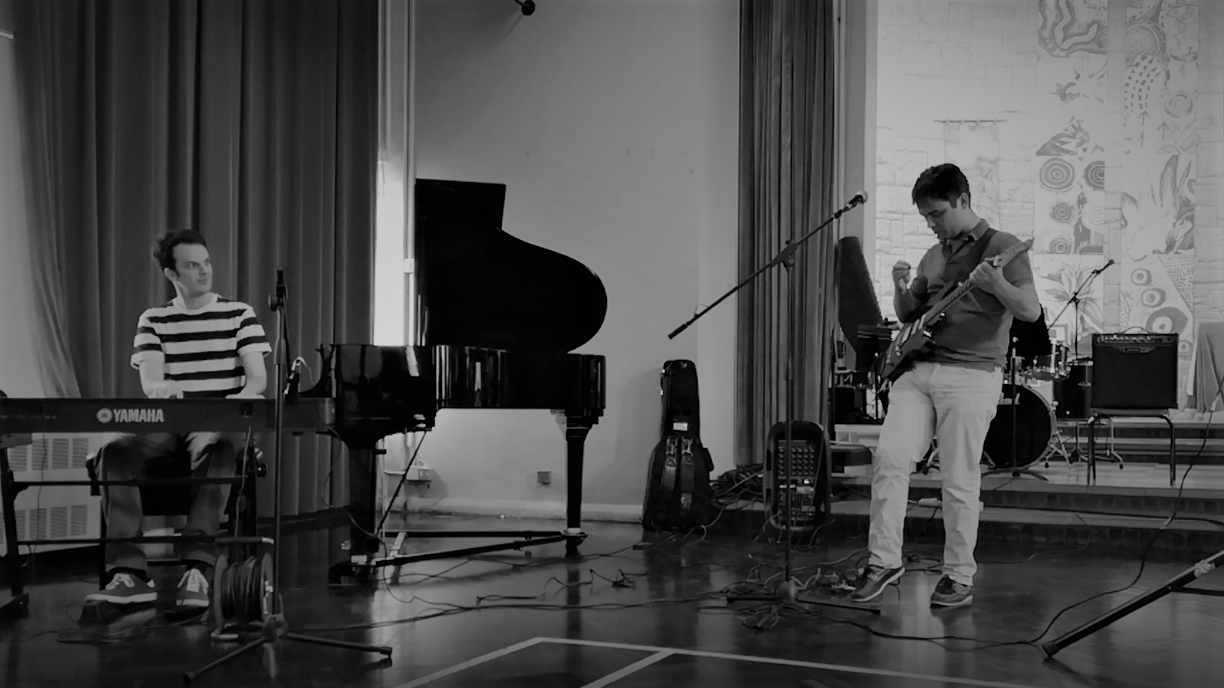
This performance of 'Echoes' is the culmination of a week's work on this piece of music.


Our Arrangement

This performance is based upon an online backing track, which itself is modelled upon Pink Floyd's performance at Pompeii in 1971. Our drummer and bassist were unavailable for these sessions, but as the vocals, guitar and keys are the most complex parts in this song, it was still of value for Adam and I to get them right between us.

The digital stage piano emerged as the preferred key instrument for this piece after we decided we needed organ or synthesiser voices on the overdrive parts in the funk section of the song. Previously we had been mic-ing up a grand piano but it didn't cut through very well in the mix and could only do one thing. There are no piano parts for the keys on the original rhythm section, only organ parts, but we liked the jazz feel that the piano gave to the arrangement whilst the guitar is in support.

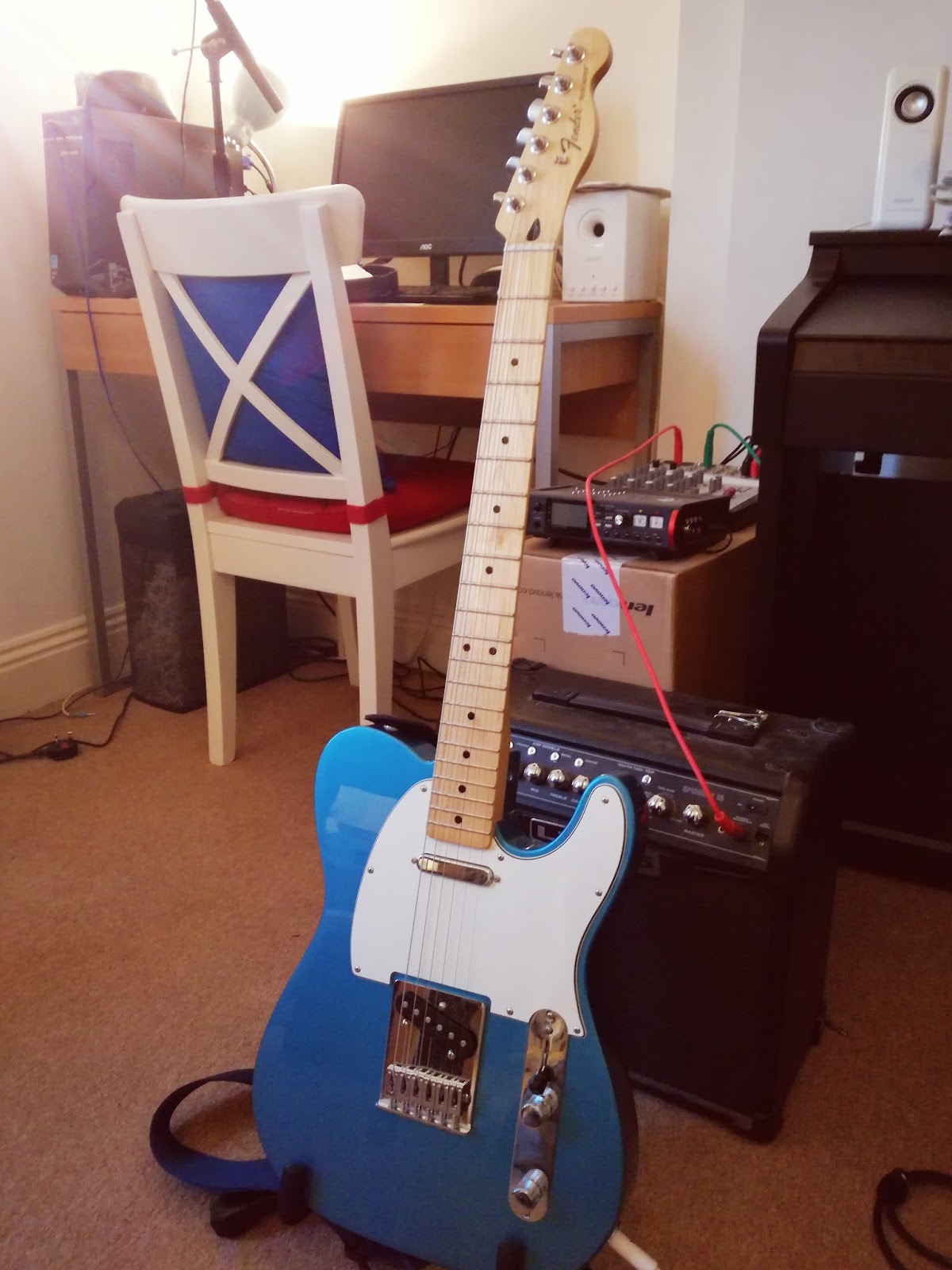
Of my two guitars, the best for this piece is Edgar, the Telecaster. He can play a characterful rhythm as well as a soaring lead, which suits what we were aiming for in this song: for the piano to lead in some parts, support in others, and vice-versa with the guitar. Cassius is very effective on rhythm, sitting lower and more discretely in the mix than Edgar, with a shimmering tone. He also has the advantage of having a floating bridge, enabling heavy use of the vibrato during the overdrive sections. However, the tone was less pure and, when leading, less soaring than Edgar's with less sustain. He did a respectable job of it during a rehearsal the previous day, but Edgar's voice is the most pleasing for this piece.

There are many ways of doing the funk section. Pink Floyd's studio version is sparse at first but becomes fuller, with a relentless, hypnotic beat underpinning it. In Pompeii in 1971 and Gdansk in 2006, the emphasis was more upon overpowering improvisational sections, especially Gilmour's, alternating between the organ and the guitar. Their otherwise unnotable rehearsal in Toronto in 1987 took a different stance, emphasising the rhythm guitar and setting the lead overdrive parts lower in the mix, with the organ more dominant and lending a lustre to the lead guitar when Gilmour took over. We decided the approach we liked best was their 1987 version, which felt more like psychedelic funk than rock, and we took many ideas away from it as well as adding our own ideas on how it could be done differently.

How We Did It


The Journey

From our first 'Echoes' session
We had been mucking around with this song for some while. Knowing it well as I do, I assumed my performance would naturally be up to standard. It came as quite a blow, then, when we filmed ourselves playing without a backing track, only for me to realise that my playing was not up to standard on review, for two main reasons above all:
  1. I did not play in time
  2. I had misconceived how to execute the funk section
I spoke to a close friend of mine about these problems. He said he had had similar experiences when he had been studying music at Conservatoire, and that he had realised back then that he had to put his love of the piece to one side, in a way, and aim for what he called an 'out of body experience': divorce yourself from enjoyment of the music, lest you bash your way through it in a fit of fun; rein yourself in and focus instead upon precision, execution

I took this advice on board. 

I later shared with Adam how I would play the rhythm differently: less of a rock riff, more of a slick soft funk, lower in the mix and in support of, rather than competition with, his piano parts. The overdrive sections would need to be toned down as well: still dominant, but more predictable, less improvised and better mixed with a new organ part in order to give the audience an experience of a euphoric rush, rather than being just an opportunity to show off.

We made a demo track based on a backing track we found online, and were immediately thrilled with the result, deciding that this was it, this was how we wanted to sound. We could not wait to hear how it sounded live.

From our third 'Echoes' session, this time with Cassius
Whilst Edgar was waiting for new strings, on the 11th of April we reconvened, this time with Cassius, and used the same backing track. When we reviewed the film footage, it was obvious that it worked and that we had found the right approach, for us at least, for this song. I proposed we convene again the following day to record the performance properly and produce a video.

The Recording process

In order to aim for a good quality music video, we had to record the sound separately from the video and then edit the two together. 

The video is recorded on a mobile phone. The quality is not what we had hoped for, but there it is. That is the reason the footage is in monochrome: it disguises the picture quality. We shall have to use something else in future. Nonetheless, rendering it so does lend it the atmosphere of an early 1960s performance, which is no bad thing.

The audio is recorded on a portable digital recording unit, 'the black box', which can take down tracks separately from each other, much a like a recording studio, which is why the audio sounds so slick and 'studio' quality. There had been three tracks recorded: keys, fed directly into the box; guitar, which was picked up with a mic at the amplifier; and vocals, which is why I have two mics in the video: one for the PA, so that I could hear myself, and one for the black box. Unfortunately, the vocal mic did not pick up any signal, probably due to a faulty wire or connection, which is why the video only starts just after the second chorus had ended; it had been our intention to present as much of our performance as we could, but this fault prevented us from doing so.

Final Thoughts


We are very pleased with our performance on this video, and hope in time to be able to perform it for real. We are confident we have found an arrangement that is at once true to Pink Floyd's composition as well as one that is distinct and right for our own sound and style.

Tuesday, 11 April 2017

Small Change, Big Difference: Cassius' New Nut

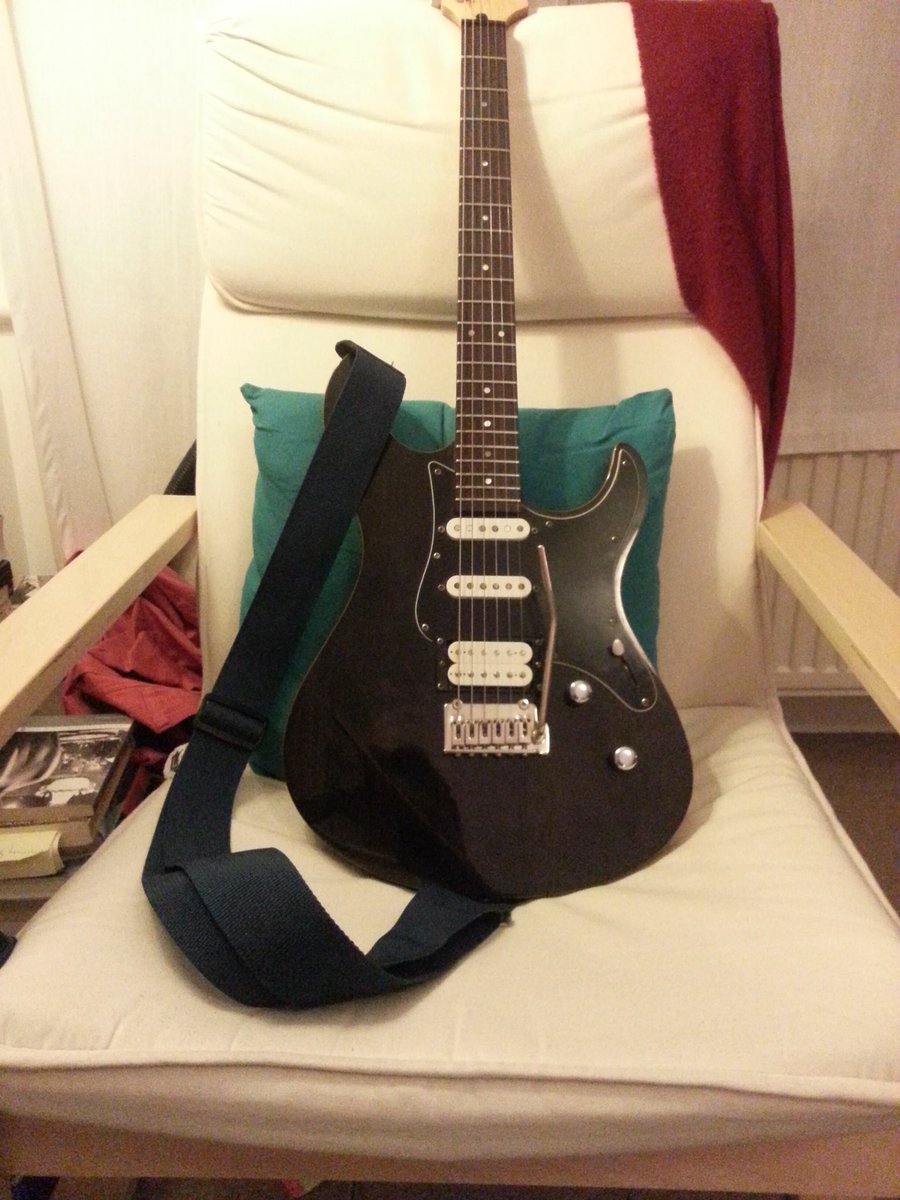
Cassius is a lucky boy: brand new nut and fresh clean strings:

Shiny new strings; gleaming new nut
Coffee and chocolate
colour scheme
Since having been fitted with a bone nut, and now rid of the factory plastic one, the improvement in Cassius' performance is hard to overstate. Previously, his tuning had been intensely unreliable and would degrade into all kinds of hideous sounds half way through the most pedestrian of songs. 

I could not work out what the problem was. I had read on online forums that a tight nut sometimes posed difficulties, and that one solution was to lubricate the grooves with 2B pencil graphite. I pencilled in the groves, and did notice an improvement in the performance but the problems were not entirely eliminated. 

Cheap and nasty plastic nut
I got it into my head that the tuners were knackered, and spent some time looking up upgrades online, and fixated on the idea that locking tuners would be answer to my prayers, but after some more research, and a few deep intakes of breath when I saw how much they cost, the advice that I kept finding over and over again was that the tuners were not the problem.

So, I looked up DIY vids on YouTube to work out how to replace a nut. It appeared surprisingly easy, and the materials were very cheap, so I ordered a bone nut, having seen comparison videos online and marking the extent of the difference, and other materials for the fitting of it. I decided that if it made no difference, it was at least a cheaper gamble than replacing the tuners. 

In the event, the only difficulty arose from the new nut's best quality: it was so hard that I spent a very long time of hard labour sanding it down to the correct size.

Deep and dark
Once fitted, the difference was immediately clear, and I cursed myself for not having done the job years earlier. But how was I to know? Before Edgar arrived, when Cassius was my only guitar, I would not have dared do any significant work on him for fear of screwing it up. The strings feel much more firmly rooted: less slack than before, more responsive somehow. I can't hear much difference in the tone, though the open strings seem to resonate a bit more, and I fancy the sustain is a little better. But the biggest improvement is in Cassius' performance: I put him through four renditions of Echoes and he de-tuned not one. Not once! Only the B string was slightly flat at the end, probably because of all the bends I do in that song. He has gone from being so unreliable that I was often embarrassed by him in rehearsals, to being about as reliable as Edgar.

This all irritated me slightly. Cassius is a beautiful guitar, a Yamaha Pacifica Pac412V (now quite rare, having been discontinued) with a lovely chocolate and coffee colour scheme, a deep and dark wood overlay on an alder body, a gorgeous rosewood fretboard with mother of pearl inlays and an effective two-pin floating vibrato bridge. I cannot understand how Yamaha, who are market challengers, not dominators, would spoil such a wonderful guitar with such a shoddy piece of essential hardware. Fender or Gibson could get away with it, for they really are dominant and can rely upon their brand names more.

It matters not anymore. In summary: tuning problems are likeliest to be in the nut; they are surprisingly cheap and easy to replace; use bone. 

Monday, 13 February 2017

On Completing My Album

That's it! All done!

Well, not quite. I still have to mix everything. However, unless I find a gap during the mixing, all parts are now written and recorded. As a matter of interest, it was the very first two pieces of music that I recorded that longest resisted any lyrics being imposed on them. I might easily have junked them both, yet, unexpectedly, within two days everything finally fell into place.

In Retrospect

Most of the guitar work was done
on this old workhorse, called Cassius

There were honestly times I thought I would never finish this project. It has taken about two years, perhaps a little under - I think I started Easter 2015 but it is so long that I can't really remember. That's much, much longer than the first project which I did with my friend, Adam Steiner, when we were students at Aberdeen. He would come round with a bottle of wine, and I would cook dinner. We would eat and drink by candlelight. Fortified, we would then start jamming, or working on a preconceived idea, or whatever, and our work rate was such that we would bash out a song in a day.

It is likely one reason I was slower this time is that I had no one to inspire me, nor anyone for me to inspire. All my ideas had to be intrinsic, and to a large extent, spontaneous and well timed. During term, I am simply too exhausted and ideas never come. During holidays, I am often sick. At weekends, there are so many things to do. It is difficult to pick up the axe and mic and just churn them out like I - we - used to.

But there are other reasons. I am more of a perfectionist now, because I am a better musician. I take longer to rehearse parts before setting them down, whereas before, my method was pretty much to make it up as I went along, producing tracks with lots of good ideas but shoddily played and recorded. Also, the parts are more complex and layered with a greater variety of moods, which takes longer to devise and master. Some tracks I had to practise for days and days before I could even think about reaching for the mixing desk.

I also had to deal with some technological issues early on in the process. That didn't help. Two songs had to be re-recorded entirely at one point. But my gear now works a dream and makes it all sound great.

The Record

Edgar will now take up most
of the new work
I still have not decided on a track order yet, so I can't comment on the mood of it overall. Having worked on it for so long, I did not achieve my aim of creating a unified tone and theme. However, there are consistencies. Most of the songs, in one way or another, involve alienation. That includes optimistic reflection upon the opportunities involved in moving on, or confronting failure, departure, or else an angry riposte at someone or something. Some of it is about silent longing. Whatever this all says about me, I would not wish to tell. 

This is not by design. I almost always (with only one exception on this project, called 'Standing on the Shore') complete at least the structure and texture of the music first, before composing a melody into which to squeeze the lyrics. That's the tricky bit: sometimes a vocal line is just obvious, but other times the music poses no obvious solutions for the singer. 

In these cases I have two approaches:
  • Download the track onto my phone and listen to it again and a
    gain on my way to work. Eventually, sooner or later, a phrase will just jump out, some few words that fit some rhythm or guitar phrase, and which act as a hook on which to hang the rest of the words. Like a seed, it germinates and blooms, and when it happens, the lines can be written in under half an hour, even after months and months of nothing but frustration, doggerel and emptiness.
  • Wail over the top of the music. This usually produces a ghastly noise, like a dying bird or wailing pig, but before long and melodic line begins to take shape. Into this line I then pour some nonsense words, just to get the syllabic structure of it right, then adjust them with more meaningful words. An example of this would be something like 'hold my green waiting room' transforming into 'God save our gracious Queen'. 

Next Steps

Nothing. I just want to focus on performing with my new band. I am content to play covers until we are comfortably in our groove. Then I might push forward some of these songs for us to play, and if the band say yay, then so much the better; if they think it stinks, no matter: it can sit on SoundCloud anyhow.

Sunday, 29 January 2017

On TM and the US Travel Ban

On TM and the US Travel Ban

Throat clearing

Like many others, I am concerned at the callousness of the refugee ban, announced on Holocaust Memorial Day, and the blanket travel ban imposed on people based on their country of birth. I am also genuinely surprised that this affects US citizens - green card holders - and British citizens, of dual citizenship, including one of our own Conservative MPs, Nadhim Zahawi.

This is one of those moments where even the quietest of us must say something. But Theresa May has said almost nothing about this in public.

What I admire about May


One of the things I admire most about May is that she is no waster of words and does not allow herself to be boxed into certain positions. This can be irritating for a lot of people, as it means she rarely answers questions directly, either from the press or MPs, but it does mean that when she gives speeches at important moments, such as addressing US Republicans, or setting out her position on our future relationship with Europe, her words resonate both with the public and in political circles. Her silence at the Turkish press conference is therefore, in my view, in keeping with her MO, and does not bother me. In fact, I prefer my Prime Ministers not to indulge in megaphone diplomacy or reflexive virtue signalling.

That is one reason I admire her.

'But...'


The other reason I admire her is that she has shown in the past that she can establish principled and difficult positions on things, such as modern slavery, the Police Federation, reminding the Reps. about the value of NATO, global trade, etc. And in her conference with Trump, she made the point - a good one, too - that a meaningful relationship involves honest disagreements.

Now is the time for such a response.

But so far, the indications are that she would rather duck the issue. This would not be ethical, or politically tenable.

What should she do next?


PMQs is coming up on Wednesday. She had better have an answer by then.

Perhaps something along these lines:

  • That the UK-USA relationship is meaningful: communications have been made to the US administration that Britain is opposed to these measures and will not adopt such a policy herself for some very good reasons.
  • That some of those affected are British citizens and should be treated with due respect.
  • That she has reminded the President of what it says in the front of every British citizen's passport:
Her Britannic Majesty's Secretary of State Requests and requires in the Name of Her Majesty all those whom it may concern to allow the bearer to pass freely without let or hindrance, and to afford the bearer such assistance and protection as may be necessary.

Thursday, 29 December 2016

2016: The Wonderful Year

2016: The Wonderful Year


As told by a cast of many and featuring Edgar, the electric guitar.


2016: As told by Dekker

I borrow the title of this piece from Thomas Dekker, who wrote a pamphlet, thus titled, about the year 1603. In this context, the adjective 'wonderful' did not carry its positive connotations of something memorably jolly or praiseworthy, but was rather more descriptive: something to wonder at, be astonished by; something notable, not necessarily in a jolly way. 1603 saw plague in London, the death of Elizabeth and the accession - but not the coronation - of King James. Not, then, a settled year.

2016: As told by everyone, it seems

2016 would also seem to a be a wonderful year: a slew of high profile deaths; God knows what atrocities in the middle east; Brexit; and Trump. One tweet in particular, I thought, captured the prevalent mood, at least online.

Humorous as this is, it also seems to tell a truth that 2016 was a particularly fatal year; but you have to buy into that truth before this tweet become meaningful; and I do not particularly buy into this truth at all.

2016: As told by me

Truth be told, I have had a great year, and I don't think I'm the only one. My career goes well, my relationships are solid, and I am finding more time (at a squeeze, admittedly) for music, reading and sport.

Beyond my own circumstances - for it wouldn't do to crow - I do not find this to have been the news-disaster year of common repute either. The celebs who have died are of a generation; that generation is now going to start passing away, and keep going well past 2017:

Thou know'st 'tis common: all that lives must die,
Passing through nature to eternity.

Syria is undoubtedly ghastly news; but every year has bad news. This is the real low of 2016, but it does not mark this year as being especially vile, for the war has raged a long while now.

I did not wish for Trump to win, but there is a feeling in me, deep down, that the American voters understand Trump and Clinton much better than we do; I cannot judge them for their choice, nor do I pretend to understand the likely consequences. But as I look at America now, divided unlike it has been in many years, and as I look at the wreckage of Obama's non-leadership abroad, I cannot weep for the Democrats or the repudiation of the things they stand for; nor can hide my anxieties for what Trump means for the future of NATO.

And as for Brexit - well, like 1999 and 2012, that's another Armageddon that has failed to materialise. The reaction to the vote has been disappointing, with some people absolutely determined to see catastrophe unfold and for Britain to disintegrate, just in order to vindicate a smug smile and one of those 'I told you so' gloats. But I can't help but feel immense optimism. The vote itself seems to have breathed new life into our political process; the divisions that have been exposed have forced a long overdue national self-reflection, uncomfortable though it be at times; and given how unsuccessful - and worse - the EU has shown itself to be, how can it be that we can't survive without it? I am convinced we can do better than survive - we can flourish; but we could do without the dreary carping and whining, thanks.

2016: As told by Edgar, the electric guitar

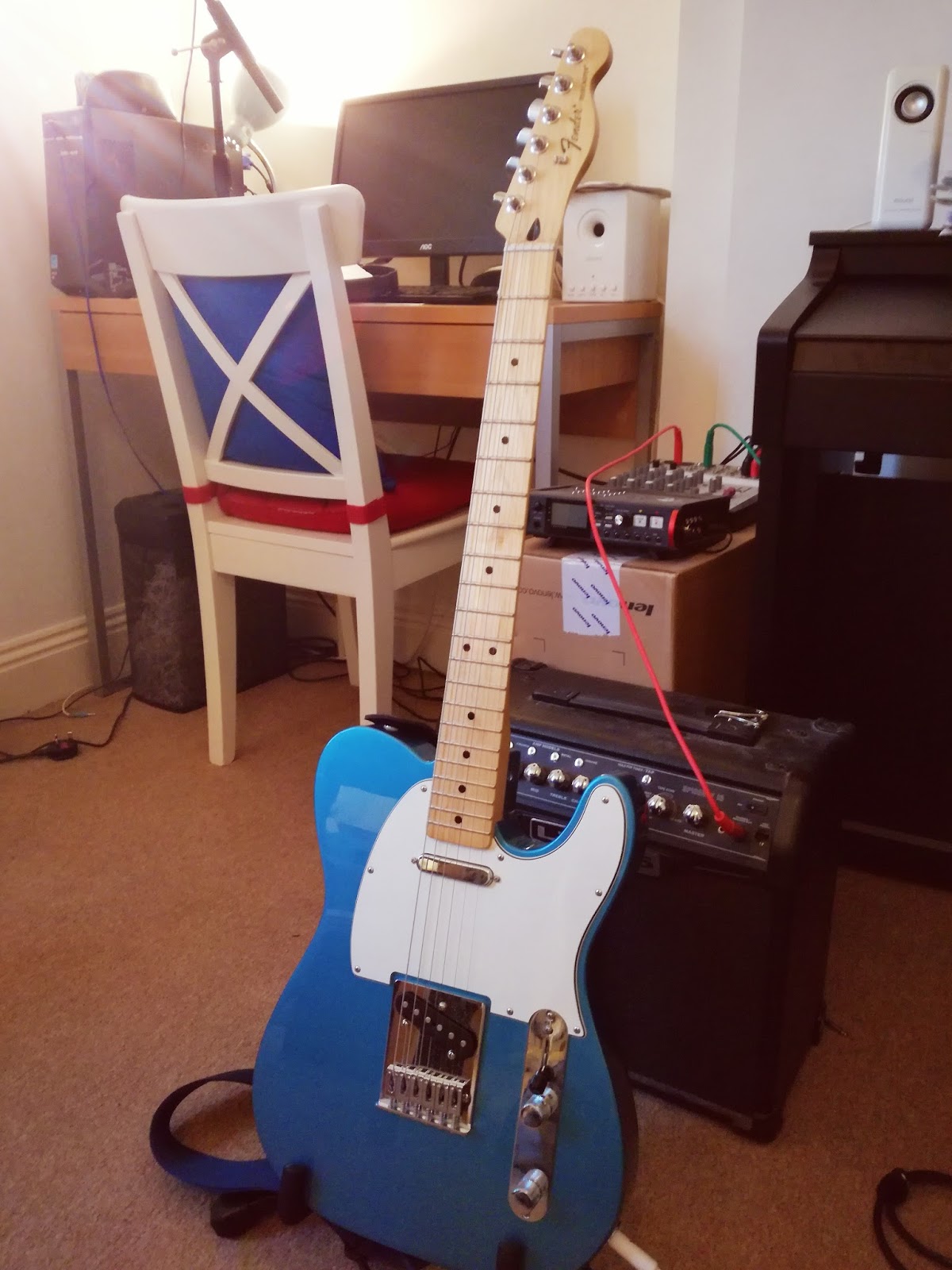
Meet Edgar, the latest addition to my family:
I am most grateful to my father for gifting me Edgar.

Edgar is a Fender Telecaster (MX Standard, for those who know). Edgar has a beautiful voice, and he can really, really sing.

The story of Edgar's name will shed some light on the year that has passed, more meaningfully perhaps than all the straightforward stuff I have written above.

Edgar's serial number begins with MX16. I looked up the coding patterns and, sure enough, this means that the guitar was built in 2016, so this year is his 'birthyear'. (Wonderful year indeed!)

Hitherto, I had long been scratching around for a name. My custom is to name my guitars like I name my cars: after characters from Shakespeare's plays. My older guitar was an easy case, for his lean and hungry looking body shape ideally suited Caesar's description of Cassius's 'lean and hungry looks': so, Cassius it was.

But look at Edgar. He's beefy, but stately; muscular and athletic, but also comfortable and smooth. I thought of Prince Hal; but inexplicably, he just isn't Hal.

But then the mood around this year fell upon me, and I was put in mind of that most distressing of tragedies, King Lear. Basically, most people die; Lear having first gone mad and left for dead in a howling storm, and Gloucester having been blinded and attempted suicide. But at the end, there is a small band of survivors, on whose behalf young Edgar, who endured and survived betrayal, a man-hunt and near fatal exposure to the elements, speaks the closing lines:

The weight of this sad time we must obey,
Speak what we feel, not what we ought to say.
The oldest hath borne most. We that are young
Shall never see so much, nor live so long.

These elegiac words, so tenderly phrased, seemed to me more apt a summary of the times than any sneer, whine, rant, GIF, meme or any other cyberflotsam I had seen drifting around the interweb. After an especially fatal time, Edgar here acknowledges the passing of a whole generation, and not just a particular band of characters. His imperative that we must express what we 'feel' rather than what we 'ought to say' acknowledges also that the times have changed, that the ground has sifted, and that those surviving must face facts and take it all in hand, as ordinary protocol will no longer suffice. The fact, then, that Shakespeare has a young man speak the final words of the play is an expression of optimism, for the burden now falls to young Edgar and his generation, and Edgar acknowledges the future as his, with humility.

So, Edgar it is. Wonderful year, i'faith.

Wishing everyone a happy 2017.

Sunday, 3 July 2016

Reasons for Optimism


Reasons for optimism


What a world.


But there are reasons to be cheerful. Polonius-like, I shall be brief.


· If the West be in a state of revolution, and I think we are, then it is the most peaceful in history, done with votes instead of pitchforks or bombs. (I might be counting my chickens, but at time of publication, this holds true.)

· Brexit might work. Lots of countries have expressed interest in forging closer relations with us, including America (except for Obama, who is halfway out the door) and New Zealand. Furthermore, the referendum might have woken our democracy from its deep slumber, and lead to a democratic renewal in England. All of us must play our part, and move on from these traumatic and tormenting events with courage. We really are all in this together, and that is a good thing.

· Politics will stabilise. The Tories look set to reunite, and if Labour split (as they must surely do) the social-democratic wing should be able to renew itself with clarity and vigour, and provide the effective opposition that every democracy needs. This might be the shake-up our party system has needed.

· Women are set to take charge. Probably Theresa May, possibly Andrea Leadsome in Britain; already Merkel in Germany; probably Clinton in the USA. If there were any doubts that the glass ceiling was rebuilt after Thatcher left, then it must surely be shattered now. And it wouldn't be the first time the England had turned to a woman for her salvation in her hour of need.

· We can heal; divisions can be reversed. If there are two nations now in Britain and America, then at least we know it; and now that we know, we can start to do something about it.

· If it takes Brexit to wake the EU up to the dangers of its own making, then maybe - maybe - it can reform and save itself, for it is an accident of timing that popular pressure exploded in England first - I had always expected Greece to be the first to fall away from the EU. And if the EU cannot, or refuses to reform itself, then perhaps it is for the best if it pass into history, as it surely will.

· Social media never reflects reality. People must soon realise this. It's time to switch it off. Those who can't switch it off can be relied upon to get hysterical; it is safe and acceptable to ignore these people.

· We have survived worse. Probably. I think.