Wednesday, 11 December 2013

Another Casual Broadside at Teachers

From a hack who states in his blog's biography that he 'works as a statistician', to denounce an indefinite number of unspecified teacher training providers, based on a sample of twelve job applications, is shoddy work. 

Concerning the recently published applications to a school in Brighton, better coverage by others deduces fewer conclusions using a greater number of the facts available. Graeme Archer, however, has jumped straight to his preferred conclusions using almost none of the facts. He has decided that all of this proves what he knew all along, that teacher training is the cause of bad teachers. Fine. Had Archer presented, say, statistical evidence that an unacceptably high proportion of NQT teachers in 2012 were 'semi-literate' after their training, then he might have a point. He has done no such thing. 

Had Archer presented evidence, say, that while training at some providers was excellent this year, it was below acceptable standards at others, then he might have a point. He has done no such thing.

Rather, he is giving us just one second hand, filtered anecdote for his evidence that PGCEs are 'producing' 'semi-literate' teachers. (I should say 'one-and-a-half', for Archer is careful to mention he has a teacher-friend - with a PhD - who also has concerns.) This is an extraordinary claim, which seems to confer upon PGCEs the power to undo literacy in adults, and which requires extraordinary evidence to prove. As a statistician, he would probably know that twelve job applications is no evidence at all.  

We know little about these twelve 'semi-literate' teachers, who stand for an entire profession. We know nothing, for instance, of when the applicants trained. This is important, for if there is a spread of years in which the applicants qualified, which seems likely given that the advertised post was for deputy-head, then it hardly tells us anything about teacher training today. We do not know where the applicants trained, which is important because there have always been a variety of training models and providers, which cannot all be assessed in the same breath. Some of them might not have done a PGCE.

We learn from elsewhere that the applicants in question had poor A-Levels and poor degrees, which instantly dates their training to before Michael Gove's new statutory degree requirements (a 2:2 or better) and, by default, rules out the PGCE as the cause of their inadequacies. Without seeing the forms themselves, it is not possible for us to judge whether the problem be poor literacy or typographical errors, (some of the recited examples could easily be typos), which would prove not poor literacy but inattention and carelessness, a cause for concern indeed but not the subject of accusation. Most of the information which would make a sample of twelve even remotely informative about the broader profession is missing.

The final paragraph is so naff as to be comedy, and worth quoting:
Those 12 semi-literate state-school applicants … [sic] I wonder how many of them possessed a PGCE? All of them, I expect. All of them out there, somewhere, teaching children how to think.
Like ghosts, or child-snatchers, or communists, lurking out there...somewhere...But a least he admits he does not know, he just 'expects' them all to 'possess a PGCE'. That's quite a glaring admission. If you're going to denounce the PGCE on a sample of twelve job applications, it pays to know if they did it or not.

Finally, and I speak as one who used to work in politics, and who owes no loyalty to Labour, it really isn't edifying to see the bashing of an entire profession serve as a proxy offensive on a political party. As a point of fact, Labour don't insist all teachers do the PGCE, they insist all teachers have QTS, which is not the same thing. While it is natural always to be vigilant about standards, and proper for a publicly-funded profession to be subject to political oversight and debate, we may still expect commentators to maintain standards of their own, including respect for evidence and a commitment to truth over ideology.

Friday, 8 November 2013

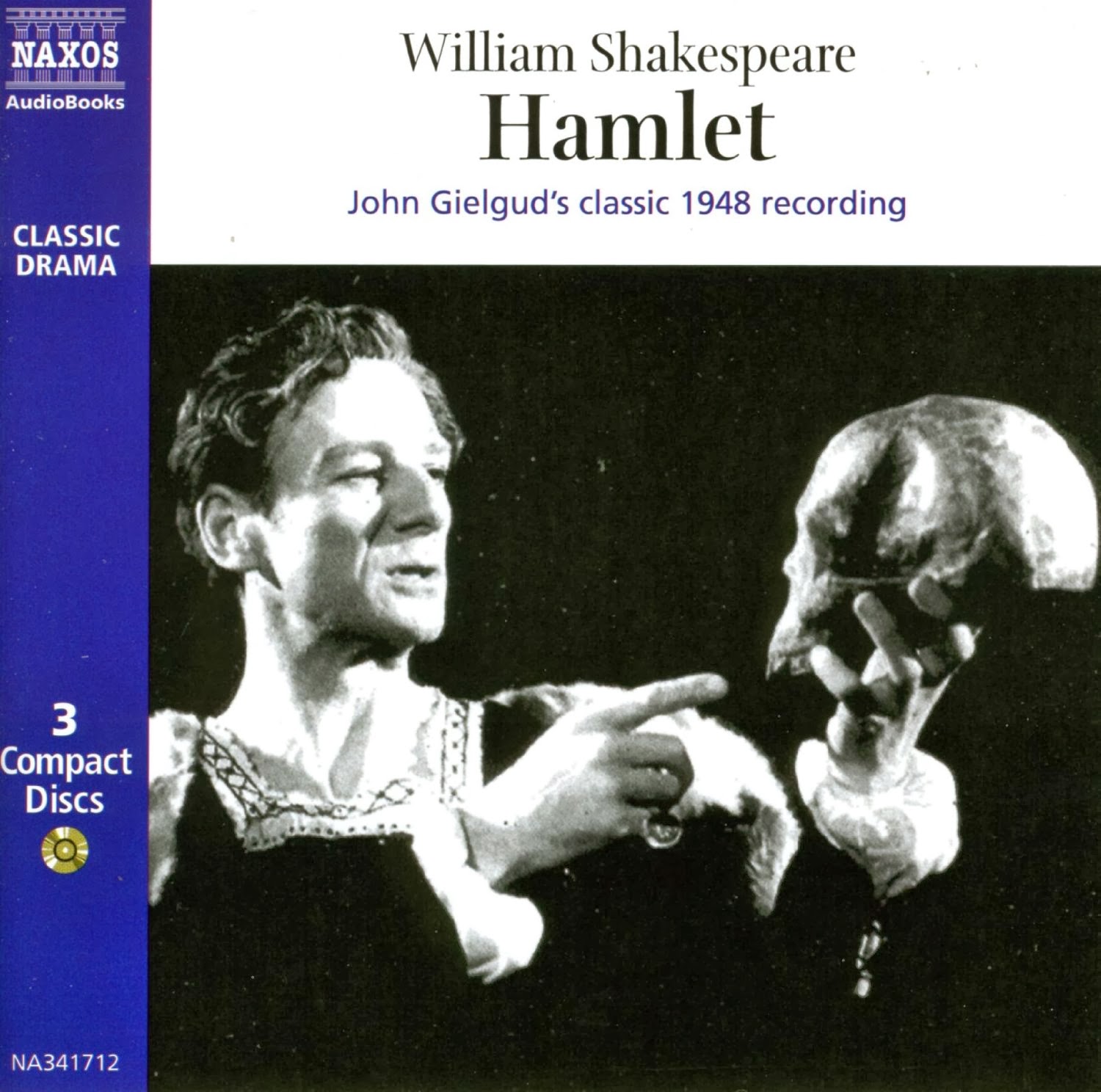
John Gielgud's 1948 Recording of 'Hamlet'


John Gielgud’s Hamlet is probably the greatest of the 20th century. He debuted in 1929, aged just 26, the youngest ever to do so on the West End stage. Over twenty years, he acted the part more than five hundred times, in a number of productions. Most other actors who take the role take it only once.

What made him great? Certainly, his delivery of the lines marks him apart from the rest. Beautiful, mellifluous and astonishingly accurate, he could achieve a speech with greater speed and still sustain greater clarity than other actors could – or can. By way of proof, this 1948 ‘entirety’ recording comes in at three hours and twenty-six minutes, compared with Kenneth Branagh’s ‘full length’ version at a full four hours.

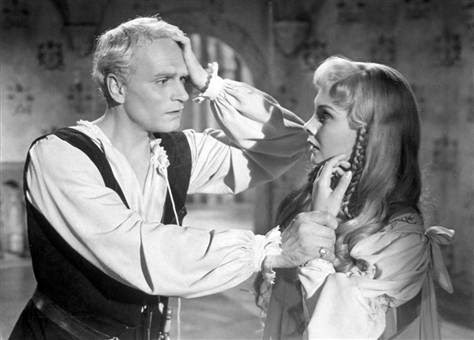
Gielgud understood the lines, the structure of the thoughts and the character that uttered them, the ideas that generate the utterance, the feelings that give the utterance weight. How many Hamlets are slow, ponderous, introspective beings, at odds with the character’s quick wit and nimble mind racing dangerously out of control? Just think of David Tenant choking on ‘to be or not to be’, Mel Gibson staring around the crypt hardly knowing where he is or why, or Olivier slowly whispering private thoughts. (It were best you think not on Branagh at all.) Once you have thought on them, listen to this Gielgud recording and mark the difference.

Thursday, 31 October 2013

Insights from a former unqualified teacher, now training on the Exeter PGCE


Shortly after I published my last post Fear and Loathing in Education, my classmate (and soon-to-be colleague) Neil let me know he had taught in the private sector as an unqualified teacher before coming onto the PGCE. I asked him if he could share his insights into this matter on my blog.

I have reproduced these insights below. The copy is unabridged and has been subjected to no editorial interference - the words are Neil's only, and I urge you to pay close attention to what he has to say.

Ian O'Neal 

*

Great response Ian! I was really infuriated when I read the Guardian article because it’s based on so many wrong assumptions which you've done a great job of addressing. I did want to add my personal perspective though.

After university I went straight into a job teaching English in a private school without any teaching qualification. I would say I was a successful teacher; my pupils seemed to enjoy the lessons, they made great academic progress and achieved excellent results at GCSE and A level. I could easily have carried on as an unqualified teacher for the rest of my career.

However, I made the decision to return to university to do the PGCE course and after two months I can honestly say that it was one of the best decisions I have ever made. Every teacher wants to be the best teacher they can possibly be for their pupils and I can already see that the PGCE is going to make me a far better teacher than I could ever have become if I had remained purely in the classroom trying to work things out as I went along, even though I was doing a good job. The main reasons for this are:

 1) Being a good teacher is about continually learning and improving. As we've seen time and time again on the course, the most effective learning takes place in a social context between learners rather than with an individual in isolation. This goes for teachers as well as for pupils. The PGCE course gives you that fertile social learning context where you can learn from tutors who have years of experience of teaching, researching and teaching teachers. You also learn loads from the other students on the course who bring new perspectives and fresh ideas. You can't help but broaden your teaching skills and knowledge in a way that is just not possible when you are in the classroom on your own.

2) When I worked as a teacher, much of what I did in the classroom was based on an intuitive understanding of what might work best. Most of the time this worked but I still had no concrete evidence as to why one approach might work better than another. The PGCE has given me evidence based in research as to what works best and more importantly, why it works. This means I can plan and make informed decisions in the classroom knowing what is needed in particular contexts. I am no longer limited to guesswork and I have a clearer rationale to justify why I might do something in a particular way. One thing that angered me about the article was the complete lack of understanding that good teaching is informed by research and good research is informed by teaching. You cannot separate the two in the way that the writer of the article envisages.

3) Life in school is exceptionally busy and time-consuming and it is very rare you get the opportunity to have more experienced teachers giving you input and it is a constant battle to find time for the kind of deep reflection on your teaching practices that are essential to growing as a teacher. The PGCE builds teacher input into the course and also forces you while giving you the necessary time to constantly reflect on and evaluate your teaching: what went well in that lesson? What would I do differently next time to improve the learning of the pupils? I feel that this emphasis on reflective teaching is one of the most vital aspects of the PGCE course as this is where teachers grow and improve the most. However, the article seemed to assume that PGCE students never even go near a classroom during their time on the course, let alone get the opportunity to reflect on their skills and development.

I cannot imagine a single unqualified teacher, however naturally brilliant they might be, who would not greatly benefit and improve as a teacher by doing a PGCE. The PGCE prepares you and gives you the foundation needed to fulfil your potential as a teacher over a lifetime of learning and reflection in a way that going straight into working as a teacher cannot. You could argue that a PGCE is just a piece of paper that allows you to teach in state schools but it's not the qualification itself that matters but the process you go through as a teacher to get that qualification. From my own experience I would say that to deny yourself the opportunity to go through that process is to limit yourself as a teacher and deprive all your future pupils the chance to be taught by the best teacher you could have become.


Tuesday, 29 October 2013

Fear and Loathing in Education


For those who grow weary of hacks, politicians, tweetsters and political anoraks who lecture us, and know little whereof they lecture us, read this piece by Anthony Seldonin the Guardian’s Comment is Free.

Ever get the feeling they're playing games with our lives?
I am a trainee teacher at the University of Exeter, on the traditional PGCE route. This term, we are mainly based at University but we spend a month of it on school placements. We are studying the theories that underpin teaching. This includes how children learn, learn to learn and (crucially for and English teacher) learn to read, amongst other things. You might think it’s obvious. You would be wrong. That’s the whole point of my being here.

Next term, I shall be on placement, in a school in Dorchester.

The term after that, I shall be on placement again, in a school on the Isle of Portland.

Shall we do the maths together? I shall spend two terms in school for (less than) one term in University. Let us express my training time as a ratio – 2:1.

This is not a recent innovation at Exeter, there is no old model which shunned school-based training but which is now overturned. Other universities arrange their terms differently, mixing weeks spent on campus with those spent in schools, but the school/university ratio is still basically the same – 2:1.

When Seldon refers to ‘the bulk of training’ now being ‘on the job’, he means the ‘Schools Direct’ scheme which has notionally moved training out of universities and into the classroom. This is misleading. It works like this: rather than applying to a university, applicants apply to a school. However, each training place is still affiliated to a university. In some cases, it is entirely true that training is exclusively in schools. In other cases, the trainee spends, say, one day in five at University, the rest of the week in school. But in many other cases, the difference between the PGCE model and School Direct Model is negligible. There are School Direct trainees on my own course at Exeter, for instance. That ratio again – 2:1. So there is a range of models in practice, there is no dichotomy between university and ‘on the job’ training.

Seldon would do well to look into teacher training before publishing his opinions about it. However, my beef is less with this article than with the trend which this article represents. How many hacks and politicians are, of a sudden, experts in education?

Would you like to explain this
to the children, or shall I?
On one point, Seldon is right. Nick Clegg is wrong to suggest that qualifications = good, no qualifications = bad. It’s nowhere as simple as that. However, Seldon is making the same mistake in framing the issue as being about the intrinsic value of qualifications, almost taking the extreme opposite view of a PGCE as being worse than useless. Most independent schools still prefer qualified teachers. The freedom they have to appoint unqualified teachers is precisely that – a freedom, to be exercised when the school judge fit. It is not the expression of a philosophy about the relative merits of teacher training.

But Clegg’s intervention was never about education. If his concern were genuine, he would have said something in Summer 2010. This is an overtly political manoeuvre to appease the Labour party (and maybe the unions too), nothing more. Just think tuition fees – that’s how Clegg behaves on policy.

King Lear with Cordelia.
Teaching this is not child's play.
It is as though politicians assume everything will fall apart without their meddling, that doctors, nurses and teachers depend on vote-chasers in order to do their jobs. But the press and commentariat is hardly better. Seldon’s idea of teachers as being analogous to parents renders the whole of education as an eleven-year day-care scheme. His idea of teacher training being merely ‘picking it up on the job’ – or, as I call it, learning by osmosis – is, one suspects, a model he would not endorse for his own children’s education. His comparison with vets and dentists to frame the idea of teachers as being born and not made is comical. It only takes a moment to knock it down. True, a dentist needs plenty of training to operate on one’s mouth, but she won’t get very far if she feel sick at the sight of rotten teeth or suffer from an acute sense of smell and aversion to halitosis. Regardless her scientific pedigree, a vet won’t flourish if she be ‘really more of a cat person’ and have problems with dogs and pet rats. ‘Born and not made’ is just a phrase that describes someone who exceeds his or her training, not an argument for doing away with it.

Seldon helps shape opinion, Clegg determines policy in government. The contributions of both of them are disappointing, but sadly common. Take one look over Twitter and Comment is Free and ask yourself if these are the best people to decide how to educate our young.

Thursday, 11 April 2013

The Baroness

I was three when Thatcher left Downing Street. I don't remember he as Prime Minister. As a boy in the 1990s I heard much about her, like some giant from history. (They always hissed it, Maggie Thatcher, leaving me in no doubt she was to be hated and scorned.) It took me some while to realise this giant from history was not from history at all, not like Henry VIII with his wives or Churchill with his Spitfires. She was still there.


Now she truly passes into history, in the way I had always imagined her. Hefty tomes and great works are waiting to be written, a vast space on the shelf for her already cleared. I am not the one to assess her in office, or what she means for us now. I never lived it, I am no witness. I was right the first time when I thought her a giant like Henry or Winston, for I never saw them die either. That she lived on, even after she was assassinated, made no difference. She couldn't possibly die, could she? Yes she could - old and frail, demented and ailing, yes she could. But not in this wise: just as she haunted us when I was a boy, so will she haunt us when I die.

Saturday, 28 July 2012

Danny Boyle's Opening Ceremony as Iconoclasm

Danny Boyle explained his Olympics vision to the BBC's Huw Edwards, saying the ceremony 'has to represent us and feel truthful.' As Martin Luther found to his surprise, there is no single 'truth', rather, as many interpretations thereof as there are people.

So what particular 'truth' was Boyle trying to convey? At a first glance, it's English history (the rural idyll was particularly English, the industrial scenes more common to all our nations). At second glance, there's a troubling undercurrent to Boyle's ideas.

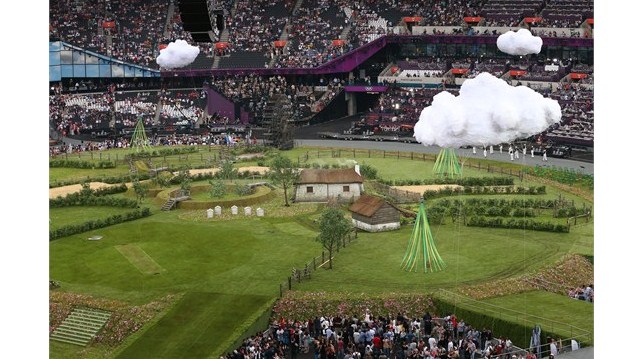
It looked like the Lord of the Rings films. That is not a cheap point. The rural idyll looked like the Hobbits' shire, the industrial hell much like the hell of Mordor. Boyle has borrowed from Tolkein's vision of urban industrialisation.

But how are we to respond to it at the Olympics? In so far as this shire, this 'merry olde England' was ever true (which it wasn't - peasant life was bondage, hardship and toil, not simple pleasures and honest living) it is gone now. All of that's hard for me, as an English patriot, to admit. And I'll admit something else to you, that the evocation of a lost England to the sound of Jerusalem made me want to cry. And to the extent that any of it yet remains, only a small fraction of us live that way: we are a city nation now. Enter: The Dark Satanic Mills.

The people literally tore up the land, revealing urban sprawl, heaving and dense conurbations with industrial blights rising all around them, the lights going down, the land turning dark, the brutalised peasants now brutalised workers, toiling at the furnaces. This hurt to watch. This really hurt. Despite anachronisms, this was a truth indeed.

But then, the twist. Toiling under the yoke of capitalism, what exactly did the workers forge? The Olympic rings.

There's a narrative for you. The land destroyed, the people enslaved, all to build the Olympic dream. What a way to start the games, what a comment on our times. It's asking us to ask the question: is this worth the heavy price we pay?

Moses wasn't happy with this
Is this a Golden Calf? An idolatrous reification of something ineffable, the workers' fruit no use to them - nothing to build a home or feed a family - but put to the furnace for someone else's false god, to be looked on in awe and wonder; they, to be forgotten.

Boyle wanted 'truth'. This is more subversive critique, far more profound than the whingeing about the price tag one hears daily rehearsed in the media. It was quiet enough that we could still gape at our Golden Calf, loud enough to trouble us. Some have criticised it for being 'lefty'. It isn't, it's iconoclastic.

Sunday, 15 July 2012

East Sussex and 1066

To Hastings


Recently I went to Hastings for a job interview.

It is difficult to get there. The circuitous journey is two and a half hours. The crow flies only sixty miles from London.

I was not sorry for this. From Hayward's Heath, on the London to Brighton Mainline, the train heads east, for Eastbourne. The journey is one of aching beauty. To the south is the escarpment overlooking a valley full of meadows. This is the South Downs. Lewes is the major town on the route. It is in a gap in the Downs - quite literally, where the land has fallen away. In its place is 'an amphitheatre of chalk hills' and exposed chalk fronts.


I remember this land. I grew up here, I spent my boyhood here. I remember the thrill of going into the long tunnel, bored through the chalk. I remember how the trees in the escarpment closed together above your head. I remember the old slam-door trains racing across the flat meadows, across the Ouse and besides the meanders of the Winterbourne stream. But I had forgotten how it all disappears into the east, leaving only barren marsh.

That is where one finds Hastings, just after 'Bo-Peep' junction. My first impressions were poor. I had already nosed the alcoholic on my train. Experience in Cornwall has taught me to mark this sign. Just beyond the station were two more alcoholics trying to keep their dangerous dogs from mauling each other. The noise was terrible. I walked down Havelock road, past boarded up shops and several more grizzled men either with dogs or cider cans. There one finds the 'Town Centre'. It is no such thing. It amounts to a confluence of minor streets with a Costa on one side, a Subway on the other. Cross the road and one is leaving the 'Town Centre'.

After the interview I inspected the sea front. Though nothing on Brighton, it may once have had its charms. It was sad to see the gutted pier hanging off the land. From there, I ventured into the 'Old Town' which was charming. The timber framed and other period buildings gives the place great character. The pace of life was slow and the place had few people. It is a place for one's retirement.

To Battle


I chose a different route to go home, for scenic variety. I am glad, for I had not realised that the village of Battle, the site of the Conquest, had a train station. As the train pulled in, I leapt off and went to see the place.

The sign to the village centre was in French. I had seen French school children in Hastings and I suppose the land of the Conquest must be of interest to them, perhaps in the erroneous belief that it represents a French victory over the English (the Normans were Norse, not French). But I welcome their euros.

Alas, English Heritage charge an entrance fee for the abbey and battlefield and I am broke. But the village is pleasant and the parish church, St Mary the Virgin, is very fine. The windows are of perpendicular style which denotes they post-date the black death, but I learn that the period of construction and later additions was quite prolonged.


When I stepped in, the place was deserted. There is something chilling about being completely alone in a church. Even to a non-believer, the sense of trespassing upon a sacred place weighs heavily on the conscience. I hurried about with my camera in fear of being 'caught' and made a swift exit thereafter. I wanted to stay, to feel the place as well as to see it. I wonder what feeling of guilt it was which chased me out.

To London


I fell asleep on the train back.