Tuesday, 11 April 2017

Small Change, Big Difference: Cassius' New Nut

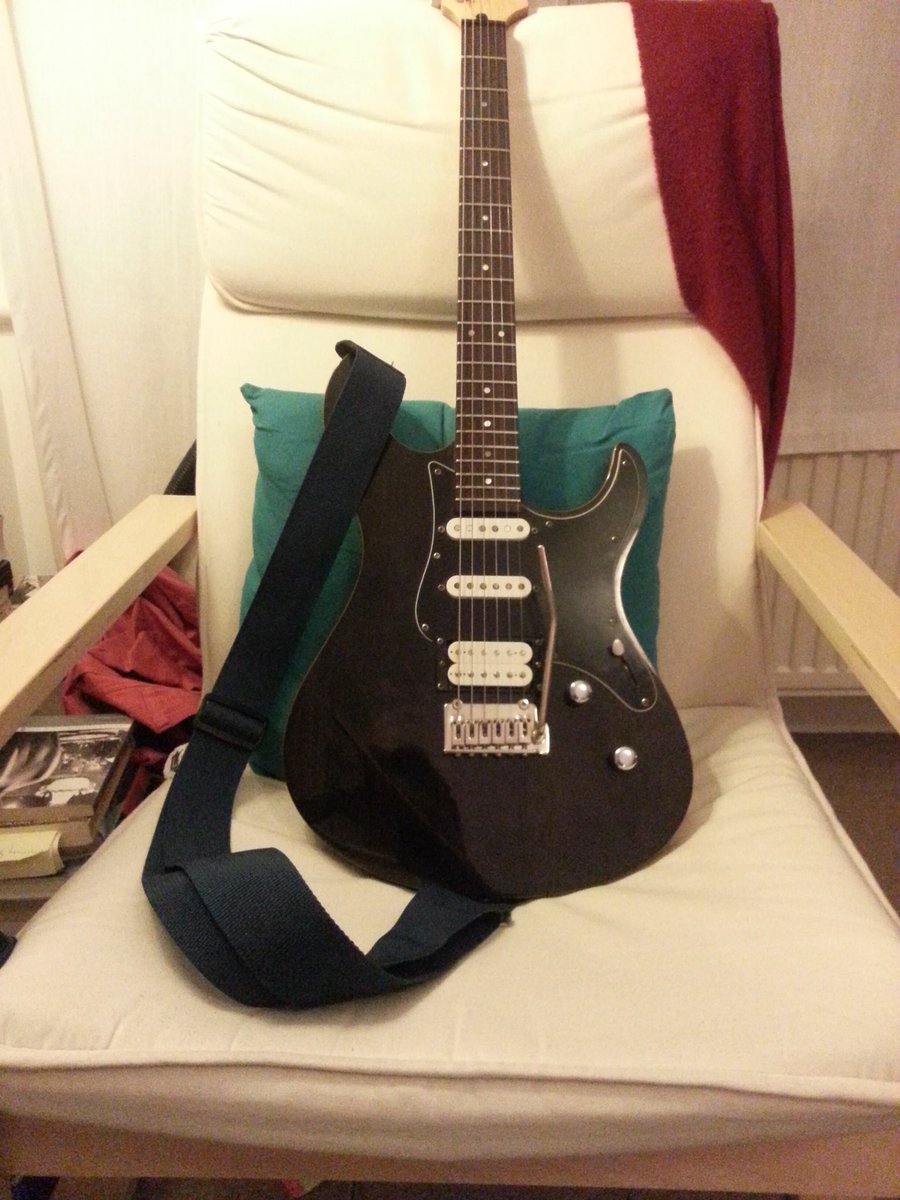
Cassius is a lucky boy: brand new nut and fresh clean strings:

Shiny new strings; gleaming new nut
Coffee and chocolate
colour scheme
Since having been fitted with a bone nut, and now rid of the factory plastic one, the improvement in Cassius' performance is hard to overstate. Previously, his tuning had been intensely unreliable and would degrade into all kinds of hideous sounds half way through the most pedestrian of songs. 

I could not work out what the problem was. I had read on online forums that a tight nut sometimes posed difficulties, and that one solution was to lubricate the grooves with 2B pencil graphite. I pencilled in the groves, and did notice an improvement in the performance but the problems were not entirely eliminated. 

Cheap and nasty plastic nut
I got it into my head that the tuners were knackered, and spent some time looking up upgrades online, and fixated on the idea that locking tuners would be answer to my prayers, but after some more research, and a few deep intakes of breath when I saw how much they cost, the advice that I kept finding over and over again was that the tuners were not the problem.

So, I looked up DIY vids on YouTube to work out how to replace a nut. It appeared surprisingly easy, and the materials were very cheap, so I ordered a bone nut, having seen comparison videos online and marking the extent of the difference, and other materials for the fitting of it. I decided that if it made no difference, it was at least a cheaper gamble than replacing the tuners. 

In the event, the only difficulty arose from the new nut's best quality: it was so hard that I spent a very long time of hard labour sanding it down to the correct size.

Deep and dark
Once fitted, the difference was immediately clear, and I cursed myself for not having done the job years earlier. But how was I to know? Before Edgar arrived, when Cassius was my only guitar, I would not have dared do any significant work on him for fear of screwing it up. The strings feel much more firmly rooted: less slack than before, more responsive somehow. I can't hear much difference in the tone, though the open strings seem to resonate a bit more, and I fancy the sustain is a little better. But the biggest improvement is in Cassius' performance: I put him through four renditions of Echoes and he de-tuned not one. Not once! Only the B string was slightly flat at the end, probably because of all the bends I do in that song. He has gone from being so unreliable that I was often embarrassed by him in rehearsals, to being about as reliable as Edgar.

This all irritated me slightly. Cassius is a beautiful guitar, a Yamaha Pacifica Pac412V (now quite rare, having been discontinued) with a lovely chocolate and coffee colour scheme, a deep and dark wood overlay on an alder body, a gorgeous rosewood fretboard with mother of pearl inlays and an effective two-pin floating vibrato bridge. I cannot understand how Yamaha, who are market challengers, not dominators, would spoil such a wonderful guitar with such a shoddy piece of essential hardware. Fender or Gibson could get away with it, for they really are dominant and can rely upon their brand names more.

It matters not anymore. In summary: tuning problems are likeliest to be in the nut; they are surprisingly cheap and easy to replace; use bone. 

Monday, 13 February 2017

On Completing My Album

That's it! All done!

Well, not quite. I still have to mix everything. However, unless I find a gap during the mixing, all parts are now written and recorded. As a matter of interest, it was the very first two pieces of music that I recorded that longest resisted any lyrics being imposed on them. I might easily have junked them both, yet, unexpectedly, within two days everything finally fell into place.

In Retrospect

Most of the guitar work was done
on this old workhorse, called Cassius

There were honestly times I thought I would never finish this project. It has taken about two years, perhaps a little under - I think I started Easter 2015 but it is so long that I can't really remember. That's much, much longer than the first project which I did with my friend, Adam Steiner, when we were students at Aberdeen. He would come round with a bottle of wine, and I would cook dinner. We would eat and drink by candlelight. Fortified, we would then start jamming, or working on a preconceived idea, or whatever, and our work rate was such that we would bash out a song in a day.

It is likely one reason I was slower this time is that I had no one to inspire me, nor anyone for me to inspire. All my ideas had to be intrinsic, and to a large extent, spontaneous and well timed. During term, I am simply too exhausted and ideas never come. During holidays, I am often sick. At weekends, there are so many things to do. It is difficult to pick up the axe and mic and just churn them out like I - we - used to.

But there are other reasons. I am more of a perfectionist now, because I am a better musician. I take longer to rehearse parts before setting them down, whereas before, my method was pretty much to make it up as I went along, producing tracks with lots of good ideas but shoddily played and recorded. Also, the parts are more complex and layered with a greater variety of moods, which takes longer to devise and master. Some tracks I had to practise for days and days before I could even think about reaching for the mixing desk.

I also had to deal with some technological issues early on in the process. That didn't help. Two songs had to be re-recorded entirely at one point. But my gear now works a dream and makes it all sound great.

The Record

Edgar will now take up most
of the new work
I still have not decided on a track order yet, so I can't comment on the mood of it overall. Having worked on it for so long, I did not achieve my aim of creating a unified tone and theme. However, there are consistencies. Most of the songs, in one way or another, involve alienation. That includes optimistic reflection upon the opportunities involved in moving on, or confronting failure, departure, or else an angry riposte at someone or something. Some of it is about silent longing. Whatever this all says about me, I would not wish to tell. 

This is not by design. I almost always (with only one exception on this project, called 'Standing on the Shore') complete at least the structure and texture of the music first, before composing a melody into which to squeeze the lyrics. That's the tricky bit: sometimes a vocal line is just obvious, but other times the music poses no obvious solutions for the singer. 

In these cases I have two approaches:
  • Download the track onto my phone and listen to it again and a
    gain on my way to work. Eventually, sooner or later, a phrase will just jump out, some few words that fit some rhythm or guitar phrase, and which act as a hook on which to hang the rest of the words. Like a seed, it germinates and blooms, and when it happens, the lines can be written in under half an hour, even after months and months of nothing but frustration, doggerel and emptiness.
  • Wail over the top of the music. This usually produces a ghastly noise, like a dying bird or wailing pig, but before long and melodic line begins to take shape. Into this line I then pour some nonsense words, just to get the syllabic structure of it right, then adjust them with more meaningful words. An example of this would be something like 'hold my green waiting room' transforming into 'God save our gracious Queen'. 

Next Steps

Nothing. I just want to focus on performing with my new band. I am content to play covers until we are comfortably in our groove. Then I might push forward some of these songs for us to play, and if the band say yay, then so much the better; if they think it stinks, no matter: it can sit on SoundCloud anyhow.

Sunday, 29 January 2017

On TM and the US Travel Ban

On TM and the US Travel Ban

Throat clearing

Like many others, I am concerned at the callousness of the refugee ban, announced on Holocaust Memorial Day, and the blanket travel ban imposed on people based on their country of birth. I am also genuinely surprised that this affects US citizens - green card holders - and British citizens, of dual citizenship, including one of our own Conservative MPs, Nadhim Zahawi.

This is one of those moments where even the quietest of us must say something. But Theresa May has said almost nothing about this in public.

What I admire about May


One of the things I admire most about May is that she is no waster of words and does not allow herself to be boxed into certain positions. This can be irritating for a lot of people, as it means she rarely answers questions directly, either from the press or MPs, but it does mean that when she gives speeches at important moments, such as addressing US Republicans, or setting out her position on our future relationship with Europe, her words resonate both with the public and in political circles. Her silence at the Turkish press conference is therefore, in my view, in keeping with her MO, and does not bother me. In fact, I prefer my Prime Ministers not to indulge in megaphone diplomacy or reflexive virtue signalling.

That is one reason I admire her.

'But...'


The other reason I admire her is that she has shown in the past that she can establish principled and difficult positions on things, such as modern slavery, the Police Federation, reminding the Reps. about the value of NATO, global trade, etc. And in her conference with Trump, she made the point - a good one, too - that a meaningful relationship involves honest disagreements.

Now is the time for such a response.

But so far, the indications are that she would rather duck the issue. This would not be ethical, or politically tenable.

What should she do next?


PMQs is coming up on Wednesday. She had better have an answer by then.

Perhaps something along these lines:

  • That the UK-USA relationship is meaningful: communications have been made to the US administration that Britain is opposed to these measures and will not adopt such a policy herself for some very good reasons.
  • That some of those affected are British citizens and should be treated with due respect.
  • That she has reminded the President of what it says in the front of every British citizen's passport:
Her Britannic Majesty's Secretary of State Requests and requires in the Name of Her Majesty all those whom it may concern to allow the bearer to pass freely without let or hindrance, and to afford the bearer such assistance and protection as may be necessary.

Thursday, 29 December 2016

2016: The Wonderful Year

2016: The Wonderful Year


As told by a cast of many and featuring Edgar, the electric guitar.


2016: As told by Dekker

I borrow the title of this piece from Thomas Dekker, who wrote a pamphlet, thus titled, about the year 1603. In this context, the adjective 'wonderful' did not carry its positive connotations of something memorably jolly or praiseworthy, but was rather more descriptive: something to wonder at, be astonished by; something notable, not necessarily in a jolly way. 1603 saw plague in London, the death of Elizabeth and the accession - but not the coronation - of King James. Not, then, a settled year.

2016: As told by everyone, it seems

2016 would also seem to a be a wonderful year: a slew of high profile deaths; God knows what atrocities in the middle east; Brexit; and Trump. One tweet in particular, I thought, captured the prevalent mood, at least online.

Humorous as this is, it also seems to tell a truth that 2016 was a particularly fatal year; but you have to buy into that truth before this tweet become meaningful; and I do not particularly buy into this truth at all.

2016: As told by me

Truth be told, I have had a great year, and I don't think I'm the only one. My career goes well, my relationships are solid, and I am finding more time (at a squeeze, admittedly) for music, reading and sport.

Beyond my own circumstances - for it wouldn't do to crow - I do not find this to have been the news-disaster year of common repute either. The celebs who have died are of a generation; that generation is now going to start passing away, and keep going well past 2017:

Thou know'st 'tis common: all that lives must die,
Passing through nature to eternity.

Syria is undoubtedly ghastly news; but every year has bad news. This is the real low of 2016, but it does not mark this year as being especially vile, for the war has raged a long while now.

I did not wish for Trump to win, but there is a feeling in me, deep down, that the American voters understand Trump and Clinton much better than we do; I cannot judge them for their choice, nor do I pretend to understand the likely consequences. But as I look at America now, divided unlike it has been in many years, and as I look at the wreckage of Obama's non-leadership abroad, I cannot weep for the Democrats or the repudiation of the things they stand for; nor can hide my anxieties for what Trump means for the future of NATO.

And as for Brexit - well, like 1999 and 2012, that's another Armageddon that has failed to materialise. The reaction to the vote has been disappointing, with some people absolutely determined to see catastrophe unfold and for Britain to disintegrate, just in order to vindicate a smug smile and one of those 'I told you so' gloats. But I can't help but feel immense optimism. The vote itself seems to have breathed new life into our political process; the divisions that have been exposed have forced a long overdue national self-reflection, uncomfortable though it be at times; and given how unsuccessful - and worse - the EU has shown itself to be, how can it be that we can't survive without it? I am convinced we can do better than survive - we can flourish; but we could do without the dreary carping and whining, thanks.

2016: As told by Edgar, the electric guitar

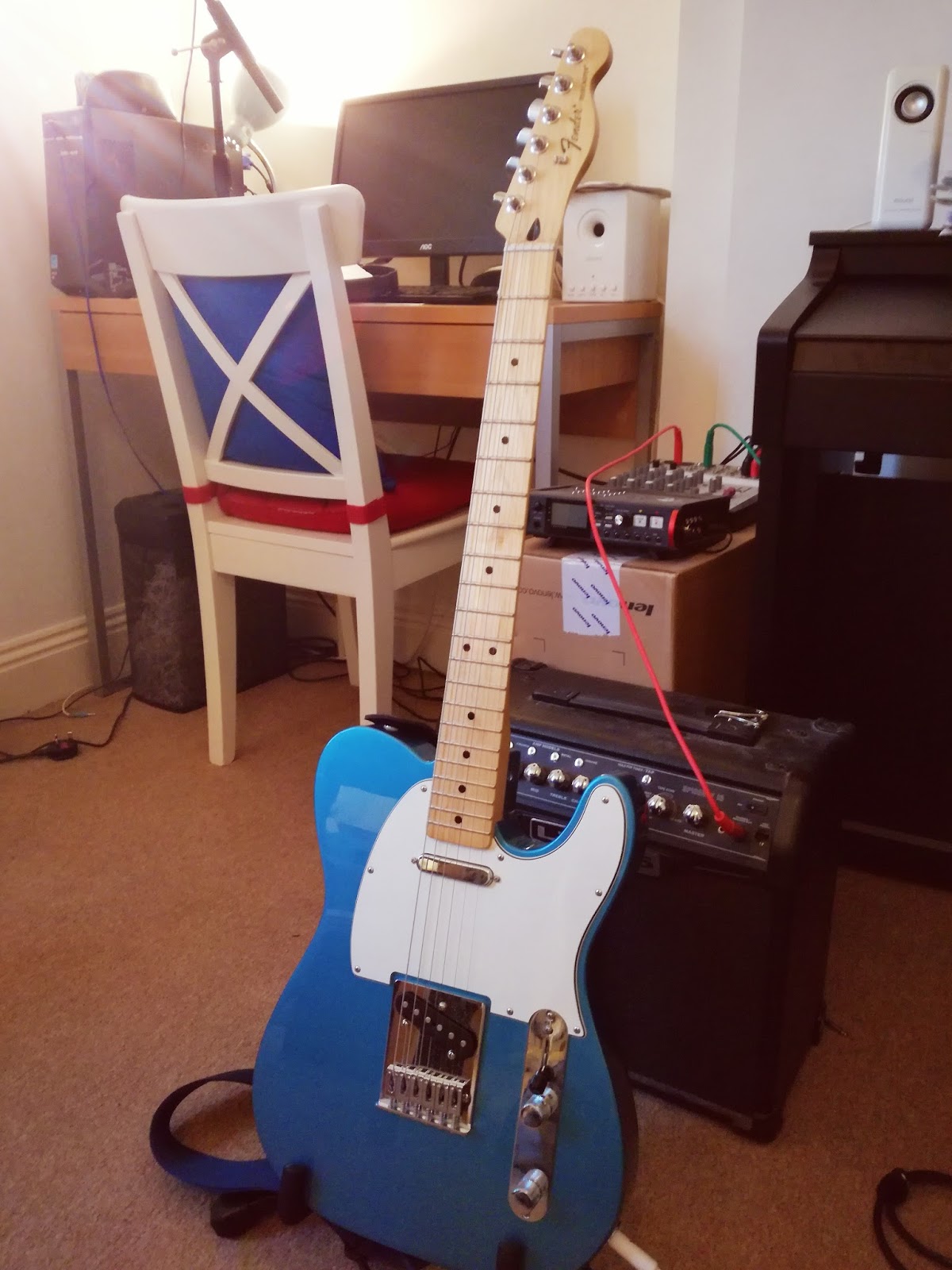
Meet Edgar, the latest addition to my family:
I am most grateful to my father for gifting me Edgar.

Edgar is a Fender Telecaster (MX Standard, for those who know). Edgar has a beautiful voice, and he can really, really sing.

The story of Edgar's name will shed some light on the year that has passed, more meaningfully perhaps than all the straightforward stuff I have written above.

Edgar's serial number begins with MX16. I looked up the coding patterns and, sure enough, this means that the guitar was built in 2016, so this year is his 'birthyear'. (Wonderful year indeed!)

Hitherto, I had long been scratching around for a name. My custom is to name my guitars like I name my cars: after characters from Shakespeare's plays. My older guitar was an easy case, for his lean and hungry looking body shape ideally suited Caesar's description of Cassius's 'lean and hungry looks': so, Cassius it was.

But look at Edgar. He's beefy, but stately; muscular and athletic, but also comfortable and smooth. I thought of Prince Hal; but inexplicably, he just isn't Hal.

But then the mood around this year fell upon me, and I was put in mind of that most distressing of tragedies, King Lear. Basically, most people die; Lear having first gone mad and left for dead in a howling storm, and Gloucester having been blinded and attempted suicide. But at the end, there is a small band of survivors, on whose behalf young Edgar, who endured and survived betrayal, a man-hunt and near fatal exposure to the elements, speaks the closing lines:

The weight of this sad time we must obey,
Speak what we feel, not what we ought to say.
The oldest hath borne most. We that are young
Shall never see so much, nor live so long.

These elegiac words, so tenderly phrased, seemed to me more apt a summary of the times than any sneer, whine, rant, GIF, meme or any other cyberflotsam I had seen drifting around the interweb. After an especially fatal time, Edgar here acknowledges the passing of a whole generation, and not just a particular band of characters. His imperative that we must express what we 'feel' rather than what we 'ought to say' acknowledges also that the times have changed, that the ground has sifted, and that those surviving must face facts and take it all in hand, as ordinary protocol will no longer suffice. The fact, then, that Shakespeare has a young man speak the final words of the play is an expression of optimism, for the burden now falls to young Edgar and his generation, and Edgar acknowledges the future as his, with humility.

So, Edgar it is. Wonderful year, i'faith.

Wishing everyone a happy 2017.

Sunday, 3 July 2016

Reasons for Optimism


Reasons for optimism


What a world.


But there are reasons to be cheerful. Polonius-like, I shall be brief.


· If the West be in a state of revolution, and I think we are, then it is the most peaceful in history, done with votes instead of pitchforks or bombs. (I might be counting my chickens, but at time of publication, this holds true.)

· Brexit might work. Lots of countries have expressed interest in forging closer relations with us, including America (except for Obama, who is halfway out the door) and New Zealand. Furthermore, the referendum might have woken our democracy from its deep slumber, and lead to a democratic renewal in England. All of us must play our part, and move on from these traumatic and tormenting events with courage. We really are all in this together, and that is a good thing.

· Politics will stabilise. The Tories look set to reunite, and if Labour split (as they must surely do) the social-democratic wing should be able to renew itself with clarity and vigour, and provide the effective opposition that every democracy needs. This might be the shake-up our party system has needed.

· Women are set to take charge. Probably Theresa May, possibly Andrea Leadsome in Britain; already Merkel in Germany; probably Clinton in the USA. If there were any doubts that the glass ceiling was rebuilt after Thatcher left, then it must surely be shattered now. And it wouldn't be the first time the England had turned to a woman for her salvation in her hour of need.

· We can heal; divisions can be reversed. If there are two nations now in Britain and America, then at least we know it; and now that we know, we can start to do something about it.

· If it takes Brexit to wake the EU up to the dangers of its own making, then maybe - maybe - it can reform and save itself, for it is an accident of timing that popular pressure exploded in England first - I had always expected Greece to be the first to fall away from the EU. And if the EU cannot, or refuses to reform itself, then perhaps it is for the best if it pass into history, as it surely will.

· Social media never reflects reality. People must soon realise this. It's time to switch it off. Those who can't switch it off can be relied upon to get hysterical; it is safe and acceptable to ignore these people.

· We have survived worse. Probably. I think.

Monday, 26 May 2014

The new English Lit GCSE


Much of the content of the new GCSE will depend upon how exam boards react to the new official guidance. However, this is what the new guidance actually says the GCSE requires:

 at least one play by Shakespeare
 at least one 19th century novel
 a selection of poetry since 1789, including representative Romantic poetry
 fiction or drama from the British Isles from 1914 onwards.

The Shakespeare requirement is in the existing GCSE and represents no change.

The 19th century novel is not required to be 'British' and names no authors - so all this business about Gove demanding Dickens and Austen is just froth.

The poetry requirement is unlikely materially to affect the balance in composition of poetry anthologies, between 'heritage poetry' (as it is painfully known) and 'contemporary poetry'.

The 20th century drama/prose is required to be 'British Isles' - this could include anything from Scotland and Ireland as well.

It is obviously constructed to exclude mid-20th century American prose. As 90% of pupils study Mice and Men, a novel Gove is known to dislike, it is obvious that Gove is altering requirements to exclude it. But this is no 'narrower' or 'broader' than the present GCSE.

Some other thoughts

I neither endorse nor oppose these changes. I'll work with what I'm required to work with. However, some of the reaction has been quite astonishing.

Labour: 'Michael Gove is putting his own ideological interests ahead of the interests of our children.'

As though Labour were not also motivated by ideology: this is a common trick to depict one's opponents as irrational and oneself as sober and reasonable. Almost every position one could adopt in relation to Education depends upon one's world view, and just as these changes are undoubtedly rooted in ideology, so too are the reasons put forward in opposition.

Labour: 'His vision is backward-looking and preventing the rich, broad and balanced curriculum we need in our schools if our children are to succeed in the future economy.'

This argument derives from economic imperatives, which are not obviously pertinent when it comes to GCSE literature. It has nothing to do with the intrinsic value of different works of literature. It is also unclear why the present situation of three American authors from the mid 20th century is 'forward-looking' or 'broader' than the new requirements which stretch over 200 years and still permit the study of (older) American literature.

As a matter of interest, a book may still exist even if no longer be included on a GCSE syllabus. Schools are still going to be in possession of those books, and will still need something to teach in Year 9. As the new KS3 curriculum requires schools teach 'seminal world literature' it seems likely that these books will still be taught.

This piece from the Guardian is a case study in frenzy, the substance of which is not worthy of engagement. However, the headline is interesting:

To Kill a Mockinbird and Mice and Men axed as Gove orders more Brit Lit

I wonder why To Kill a Mockingbird is receiving equal weight in the reportage? Hardly anyone studies it anymore. Ninety percent of pupils study Steinbeck's novel, not Harper Lee's.

Monday, 17 February 2014

Shakespeare at Key Stage 3: Problems with 'The Tempest'

The story so far...


'I have suffered with those that I saw suffer.'
This term I helped teach The Tempest to Y9. It is a popular choice at this level, largely because it used to be the core text for the now defunct SATs which means English departments have plenty of copies left over. I suspect (though I have not heard anyone say explicitly) that many teachers reckon the subject matter - magic and exile on a strange island - is the kind of thing the pupils could engage with. My other suspicion is that it is a suitable option because it is weightier than a comedy, lighter than a tragedy and, crucially, because it requires no prior knowledge and stands alone, unlike the history plays.

The problems with The Tempest


All of these things are fair enough. However, I could not help but feel that there was something missing. It is possible this be because I have never truly loved The Tempest myself. Certainly it is charming entertainment with lovely moments but it tends toward the realm of ephemera, which I think is visible in the debt it owes to the ephemeral genre of the masque, popular at the time in James' court but forgotten ever after. It just succeeds in pulling back from such an abyss in its handling of the thorny question of colonisation and legitimate authority, but these concepts are difficult and abstract for the literal-minded thirteen-year-old growing up in a stable democracy.

It is also oddly un-poetic. I confess I am overtly treading on the subjective here, and aesthetics are difficult to turn into more than matters of personal taste. However, there is a practical measure to my objection. The first is that aesthetics - sheer beauty - can have a mesmeric effect on the pupils. Such moments as Caliban's speech - one of two poetic high points - had the pupils captivated either when I recited it myself, or when I called upon trusty old Gielgud to do it for me. Moreover, those plays in which Shakespeare more carefully observes the rigours of meter are thereby more fertile plains for teaching iambic pentameter (plus other styles), which besides anything else is something pupils need to know for the poetry and Shakespeare components of the GCSE.

On genre


'Those are pearls that were his eyes.'
Finally, on the matter of genre, there is quite a practical problem with The Tempest: it is a 'romance', not in the Mills & Boon or Hugh Grant sense of the word, but in the ancient (and still current) genre into which we place medieval knights, James Bond and Eliot's The Wasteland. I have not the time (you are not likely to have the patience) to get into details save one feature: romance is characterised by a sequence of minor episodes, each with a minor climax, threaded together by the constant motion of the meandering story. Just think of 007, how many fights and car chases he engages in along the way, how many flights he takes to new and exciting places, how many women he meets as he goes, how many villains...and now compare that with a handful of separate parties scattered across an island, each bumbling along until the final scene. Think of the tempest itself, or Caliban swapping Prospero for Stephano, or Anthonio and Sebastian attempting to murder Alonso, or the two youngsters falling in love, or the masque, or Ariel's banquet, et cetera. Charming entertainment, indeed, and in different guises romance would work wonderfully at Y9, but illuminating the plot for the children is problematic here.

So what?


So I have some issues with using The Tempest in Y9. So what? And I know why I have those issues. Who cares? For surely this is an idle discussion. The department bookshelves have plenty of copies of this play, not so many copies of the others and small prospect of funding for any expansion on unproven, less well known plays, which means I had better buckle down and just work on doing the best I can with The Tempest next year and the year after, et cetera. Right?

Well, maybe wrong. The new KS3 curriculum goes live in September of this year. It stipulates the teaching of not one but two Shakespeare plays. Some departments may already have plenty of copies of something else but which may not be entirely suitable for the 11-13 age bracket, whilst others may not have another play ready to use at all. As a result, it is meet that one reflect upon the strengths and weaknesses of the current core text in deciding where to go with a potential second. Suddenly, the 'so what?' has become a 'now what?'

And I think I have an answer, which I shall share with you another day...